Tea in Iran is not a drink you make when you are thirsty. It is something you offer the moment someone walks through your door. It is on the stove before breakfast and still going long after dinner. It is, in the most ordinary and genuine sense, how Persian households show they are glad you are there.
For those of us in the UK who have tried Persian tea at a friend’s home or at an Iranian restaurant, that first sip tends to stay with you. The colour is deeper, the flavour is richer, and there is something about the way it is served in a small glass, with a date or a sugar cube on the side that makes the whole thing feel more intentional than your average cup.
The good news is that learning how to make Persian tea at home is not complicated. You do not need specialist equipment or hard-to-find ingredients. What you do need is a little patience and the right approach. This guide will take you through everything.
What Sets Persian Tea Apart
Most people in the UK are used to dropping a tea bag into a mug and pouring boiling water over it. Persian tea works on a completely different logic.
The foundation is loose-leaf black tea, brewed as a strong concentrate inside a small teapot. That concentrate is not poured straight into the cup, it sits in the pot, staying warm over a very gentle heat, while each person dilutes their own glass with hot water to the strength they prefer. This gives every cup a personal quality that a tea bag never can.
The traditional tool for keeping things warm is the samovar, a large ornate urn, usually brass or chrome, that heats water continuously and holds the teapot on top. Iranian families run their samovar throughout the day. Guests arrive, and tea is ready. You sit down, tea is ready. You wake up, and tea is ready. It is a way of life as much as a brewing method.
You do not need a samovar to make good Persian tea. But knowing why it exists helps you understand the spirit behind the whole process — slow, attentive, and always ready for whoever needs a cup.
The flavour profile is also distinct. Some households add green cardamom pods to the pot for a floral warmth. Others brew with a few strands of saffron for a golden hue and a delicate perfume. Neither is overpowering, both are quietly beautiful. And the tea is always served in small, clear glasses so you can see the colour, which matters more than you might expect.
What You Will Need
- Loose leaf black tea — Iranian Lahijan tea is the most authentic choice; Ceylon or Assam work well too
- Cold fresh water
- Green cardamom pods, lightly crushed — 2 to 3 (optional)
- Saffron strands steeped in a little hot water (optional)
- Sugar cubes or Medjool dates for serving
- A small teapot — ceramic or glass
- Small heatproof glasses
Everything on this list is available from ASA Market UK, including loose leaf Persian tea, cardamom, saffron, Medjool dates, and traditional Persian sweets — all in one place, delivered to your door.
How to Make Persian Tea — Step by Step
Step 1 — Boil fresh cold water Start with cold water in the kettle every time. Bring it to a full rolling boil. Persian tea needs genuine heat to draw out the right flavour from loose leaves, somewhere between 95 and 100°C is ideal. Water that is merely warm, or that has been boiled once already and left to cool, will give you a noticeably duller result.
Step 2 — Warm the teapot first Pour a small splash of boiling water into your teapot, give it a gentle swirl, and tip it out. It takes ten seconds and stops the pot from dragging the temperature down the moment you add the tea.
Step 3 — Measure your tea. Add one heaped teaspoon of loose leaf tea for each person you are serving, plus one additional spoon for the pot itself. Two people means three teaspoons. If you are using cardamom, crush two or three pods lightly with the flat of a knife, just enough to open them up, and drop them in alongside the leaves.
Step 4 — Fill the pot. Pour boiling water over the leaves, filling the pot to about three-quarters. You are creating a concentrate here, not a finished drink. One gentle stir is all it needs to make sure the leaves are fully in contact with the water.
Step 5 — Steep slowly on the lowest heat. This is the step that most people get wrong when they first try. Place the teapot on your smallest burner at the absolute lowest setting. If you have a heat diffuser mat, use it. The goal is to keep the tea hot without ever letting it boil. Leave it for a minimum of ten minutes — fifteen is better. The slow, steady heat coaxes out depth and sweetness that a three-minute brew simply cannot produce.
Step 6 — Add saffron near the end. If you are using saffron, steep a small pinch of strands in a teaspoon of boiling water in a separate small cup for about five minutes. The water will turn a vivid gold. Stir this into the teapot in the last two or three minutes of brewing. You will not need much; saffron is powerful and a little goes a genuinely long way.
Step 7 — Pour and find your strength. Fill your glass one-third of the way with the concentrate from the pot, then top it up with boiling water from the kettle until the colour looks right. A good Persian tea sits somewhere between a warm amber and a deep ruby. Too pale means more concentrate; too dark means a little more hot water. You will find your preferred ratio quickly.
Step 8 — Serve while it is hot. Pour straight away. Persian tea loses something when it sits. Set out your sugar cubes or dates, and drink it while the glass is still too warm to hold comfortably for long.
Using Cardamom and Saffron
Cardamom is the more everyday addition. Whole green pods, lightly cracked open, go into the pot at the very beginning with the tea leaves. As the tea steeps, the cardamom releases a gentle floral warmth — not spicy, not sharp, just quietly fragrant in a way that makes the tea feel more considered. Two pods is the right starting point. Three is acceptable if you enjoy the flavour. Beyond that, it can veer into something that tastes more like medicine than tea.
Saffron tends to come out for guests or occasions. A pinch steeped separately in hot water and added to the pot near the end gives the tea a golden shimmer and a barely-there perfume that is genuinely lovely. It also makes the cup look exceptional in the glass, which, in Persian tea culture, is part of the point.
Things That Go Wrong While Making Persian Tea at Home
Reaching for tea bags. It is tempting, especially if you are just testing the waters. But tea bags are filled with dust — the lowest grade of the leaf — and no amount of good technique will make up for that. Loose leaf tea is where the flavour lives.
Cutting the steep short. Eight minutes will give you something drinkable. Fifteen minutes will give you Persian tea. The patience required is modest; the difference in the cup is not.
Letting it boil. A teapot actively boiling on the hob will produce bitter, harsh tea. Warmth and stillness is what you are after. If you can see it bubbling, the heat is too high.
Heavy-handed cardamom. Two pods. That is your starting point. You can always add more next time once you know what level suits your taste.
Drinking the concentrate straight. The pot is a concentrate by design. Fill one-third of the glass, then dilute. Pouring it neat is like drinking espresso through a straw — technically possible, not recommended.
Serving Persian Tea Properly
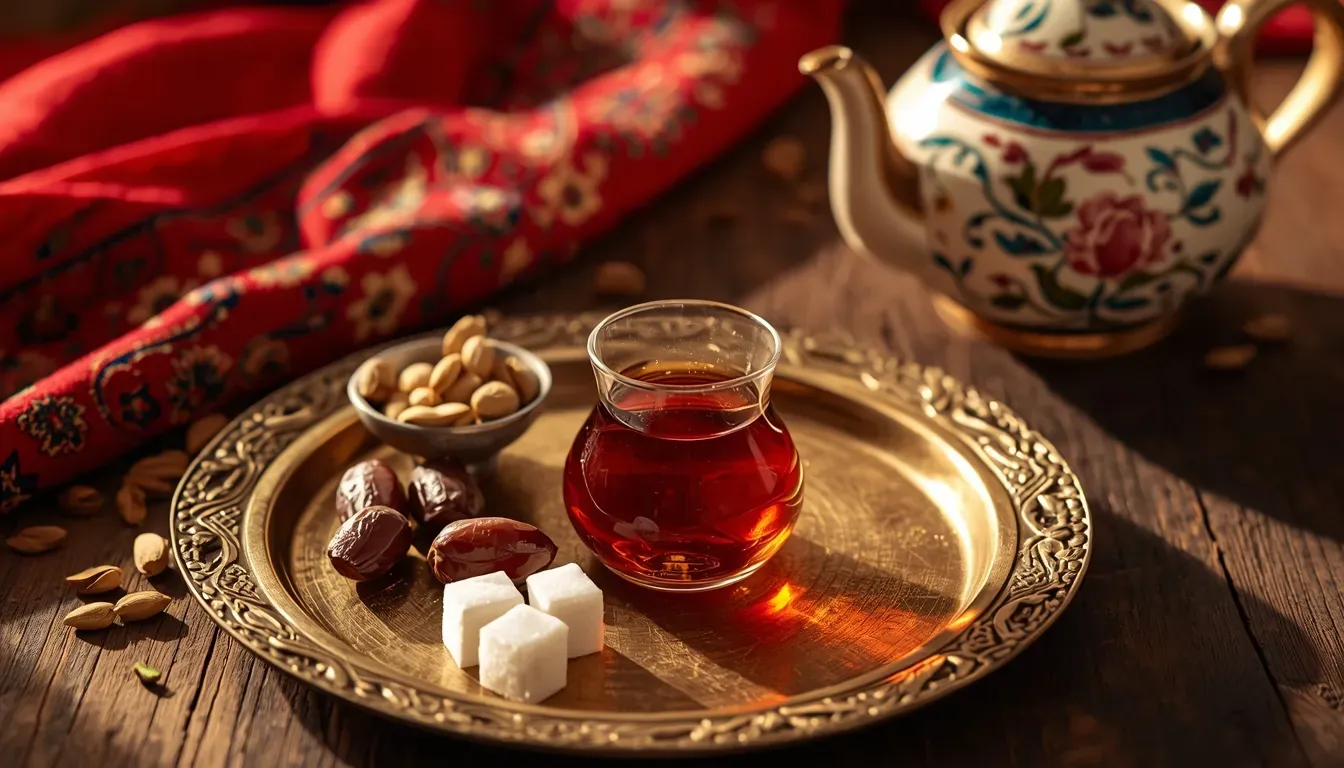
The glass matters. Persian tea is served in small, clear glasses — traditionally a pear-shaped style called an estekan — so the colour of the tea is on full display. A good amber tells you the brew worked. If you do not have the traditional glasses, a small heatproof tumbler or even a clear espresso cup will do. Avoid large mugs, which cool the tea too quickly and lose the visual element entirely.
On the side, set out whatever you have:
- Sugar cubes — held between the front teeth as you sip, so the tea passes through the sugar rather than dissolving into it
- Medjool dates — their deep caramel sweetness sits beautifully against a strong black tea
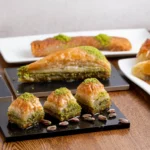
- Persian sweets — gaz, sohan, baklava, or nabaat rock candy are all traditional choices
- Pistachios or walnuts — a small bowl alongside the glass is always welcome
- Dried figs or apricots — simple and perfect
In Iranian culture, you do not ask a guest if they want tea. You make it. The offer and the cup arrive together. That instinct, to serve before being asked — is woven into the entire tradition, and it is one of the nicest things about it.
Finding Ingredients in the UK
ASA Market UK carries everything you need to brew and serve Persian tea at home, quality loose-leaf black tea, green cardamom pods, saffron, Medjool dates, sugar cubes, and a full selection of Persian sweets and pantry staples. Everything is available online with UK delivery.
There is nothing difficult about Persian tea once you understand what it is trying to do. It is not in a hurry. It wants to be warm and strong and ready when you need it. It wants to be shared.
Brew a pot this weekend. Find your smallest glasses. Put a few dates on a plate. Steep it for fifteen minutes and let the colour in the glass do the talking. That is all there is to it, and that is exactly enough.
Frequently Asked Questions
What type of tea is used in Persian tea?
Loose leaf black tea is always the base. Iranian-grown tea from the Lahijan region in Gilan province is the most traditional choice. If that is not available, a strong Ceylon or Assam loose leaf tea is a perfectly good alternative. Tea bags are not recommended — the grade of leaf used in bags does not produce the same depth of flavour.
Do I need a samovar to make Persian tea at home?
No. A samovar is a traditional part of Iranian tea culture, but a kettle and a small teapot placed on a very low heat does the same job at home. The important thing is keeping the brewed concentrate warm without letting it boil.
How long does Persian tea need to steep?
Ten minutes at an absolute minimum. Fifteen minutes is the sweet spot for most people. The slow steep on a gentle heat is what gives Persian tea its characteristic depth — cutting it short produces something noticeably thinner.
Is milk ever added to Persian tea?
Not traditionally. Persian tea is always served black, and the flavour is designed to be enjoyed without milk. It is sweetened instead by the sugar cube or date eaten alongside it, rather than anything added to the cup itself.
Where can I buy Persian tea ingredients in the UK?
ASA Market UK is a good one-stop source. They stock loose leaf Persian tea, cardamom, saffron, Medjool dates, and Persian sweets, all available with UK delivery.