Dried plums, commonly called prunes, have a long-standing reputation as a food for bowel regularity. That reputation has some scientific support, but the explanation is more nuanced than “they contain fibre.” Whole dried plums combine soluble and insoluble fibre with sorbitol, pectin and polyphenols, creating several possible effects inside the bowel. Those effects may make stools easier to pass for some people, while causing gas, urgency or loose stools in others.
Are Dried Plums Good for Digestion? The Short Answer
Yes, dried plums may be good for certain aspects of digestion, particularly stool output and bowel regularity. Controlled research has found that eating dried plums can increase stool weight and, in some populations, bowel-movement frequency. Their digestive action appears to come from the combination of fibre and sorbitol rather than from one isolated nutrient.
However, “better digestion” should not be interpreted as a guaranteed improvement in every gastrointestinal symptom. In a major trial involving healthy adults with low fibre intakes and relatively infrequent stools, dried plums increased stool weight and frequency but did not reduce whole-gut transit time. Flatulence was also more common during dried-plum consumption. More recent dietary guidelines conclude that evidence remains too limited to establish that prunes are superior to psyllium for chronic constipation. ([pubmed.ncbi.nlm.nih.gov](https://pubmed.ncbi.nlm.nih.gov/29398337/))
The balanced answer is therefore that dried plums can be a practical digestive-health food for some adults, especially when stools are small, hard or infrequent. They are not a universal treatment for constipation, bloating, abdominal discomfort or an unhealthy gut microbiome.
What Does “Good for Digestion” Actually Mean?
Digestion is often treated as a single outcome, but it includes several different processes and symptoms. When someone asks whether dried plums are good for digestion, they may be asking whether the fruit can:
- increase the number of bowel movements;
- make hard stools softer and easier to pass;
- increase stool weight or volume;
- reduce straining or incomplete evacuation;
- change how quickly material travels through the digestive tract;
- reduce gas, bloating or abdominal discomfort; or
- support a more favourable gut microbiome.
These outcomes do not always move together. A food can increase stool weight without noticeably speeding transit. It can soften stools while also increasing gas. It may help a person whose usual diet is low in fibre but provide little benefit—or excessive fermentation—for somebody already eating a high-fibre diet.
Digestive Regularity Is Not the Same as Overall Gut Health
More frequent bowel movements are not automatically proof of a “healthier gut.” Regularity is one useful outcome, but overall gut health also involves comfortable stool passage, an absence of disruptive symptoms, normal digestive function and a complex microbial ecosystem.
Likewise, a change in one bacterial group does not establish that the entire microbiome has improved. Microbiome studies can measure bacterial abundance, diversity, fermentation products and other markers, but researchers do not yet have one universal microbiome score that defines optimal digestive health. Claims that dried plums “reset,” “cleanse” or “heal” the gut go beyond the available evidence.
Why Dried Plums Can Affect Digestion
The digestive effect of dried plums is best understood as a whole-food effect. Fibre contributes physical bulk and water retention, while sorbitol can increase the amount of water that remains in the bowel. Pectin and polyphenols may influence fermentation or the intestinal environment, although their independent clinical contribution is less certain.
Fibre Adds Bulk, Holds Water and Supports Stool Formation
Dried plums contain a mixture of soluble and insoluble fibre. Insoluble fibre is not broken down completely during digestion and can contribute to the solid structure and bulk of stool. Soluble fibre interacts with water and may form a softer, more hydrated material as it moves through the digestive tract.
Some fibre also reaches the large intestine, where bacteria can ferment it. This process can produce compounds used by intestinal cells, but it can also produce gas. Fermentation is gradual and varies between people according to their habitual diet, microbial community, bowel sensitivity and the amount consumed.
This is why more fibre is not always immediately more comfortable. A sudden increase can lead to fullness, wind or bloating, particularly if several high-fibre foods are added at once. Dried plums should therefore be considered one possible contributor to total daily fibre—not an unlimited remedy that works better as the portion grows.
Sorbitol Draws Water Into the Bowel
Sorbitol is a naturally occurring sugar alcohol, or polyol, found in plums and several other fruits. It is absorbed slowly and may be absorbed incompletely in the small intestine. Sorbitol that remains in the digestive tract has an osmotic effect, meaning it helps retain or draw water into the bowel.
This extra water can soften a dry or hard stool, which helps explain why the effect of prunes and digestion cannot be attributed to fibre alone. However, the same mechanism can become uncomfortable when the portion exceeds a person’s tolerance. More water in the bowel may result in urgency or loose stools, while fermentation of unabsorbed sorbitol can produce gas. ([monashfodmap.com](https://www.monashfodmap.com/blog/what-are-polyols/))
Sorbitol tolerance differs considerably. One person may eat a moderate serving without symptoms, while another may develop bloating from a smaller amount. The remainder of the meal matters too: combining dried plums with several other foods rich in fermentable carbohydrates may create a greater total digestive load.
Pectin and Polyphenols May Also Play a Role
Pectin is a type of soluble fibre found in fruit cell walls. It can hold water and may be fermented by gut bacteria. Dried plums also contain polyphenols, a broad group of plant compounds that can interact with the gut environment and microbial metabolism.
These components offer plausible additional explanations for the effects of dried plums, but their individual contribution in humans has not been separated clearly from that of sorbitol and the overall fibre mixture. It is more accurate to describe them as possible supporting factors than as proven stand-alone treatments or prebiotics.
What Research Shows About Dried Plums and Bowel Function
Human evidence includes trials in people with constipation and trials in otherwise healthy adults with low fibre intake or infrequent bowel habits. These populations should not be treated as interchangeable. Results from a short trial in healthy adults cannot automatically be applied to irritable bowel syndrome, pelvic-floor disorders, medication-related constipation or persistent unexplained symptoms.
The evidence base is also relatively small. Studies have used different portions, comparison treatments and outcome measures, making it difficult to identify one dose or predict who will respond.
Stool Frequency and Stool Weight
One of the stronger trials assigned 120 healthy adults with low fibre intakes and three to six stools per week to consume 80 grams of dried plums, 120 grams of dried plums or a water-only control each day for four weeks. Both dried-plum groups received additional water.
The dried-plum groups had greater increases in stool weight than the control group. Stool frequency was also higher after dried-plum consumption, although the relationship was not a simple case of the larger serving producing the largest frequency increase. This matters because it shows that individual response and normal variation can be as important as portion size. ([pubmed.ncbi.nlm.nih.gov](https://pubmed.ncbi.nlm.nih.gov/29398337/))
These findings support the use of prunes for bowel regularity in some adults with low stool output, but they do not prove that everyone should eat the portions used in the study. People who already have daily, comfortably formed stools may see little benefit and could instead experience excessive softness or gas.
Stool Consistency and Straining
Earlier research in adults with mild to moderate constipation reported that dried plums improved complete spontaneous bowel movements and stool consistency compared with psyllium during a small crossover trial. However, straining and overall constipation symptoms did not differ significantly between the interventions.
This distinction is important. A stool can become softer without resolving incomplete evacuation, painful defecation or the need to strain. Constipation is not defined solely by frequency, and some forms of constipation are driven by factors that adding fermentable fruit cannot correct.
Whole-Gut Transit Time
Whole-gut transit time measures how long material takes to travel through the digestive tract. Although dried plums are often said to “speed up digestion,” the large four-week trial found no change in whole-gut transit time despite increases in stool weight and frequency. ([pubmed.ncbi.nlm.nih.gov](https://pubmed.ncbi.nlm.nih.gov/29398337/))
That result is not contradictory. Dried plums may increase stool water and bulk, leading to more output, without substantially changing the speed of movement through the entire gut. “Supports regularity” is therefore more evidence-based than “makes digestion faster.”
Dried Plums Compared With Psyllium
Psyllium is a concentrated, gel-forming fibre supplement. Dried plums are a whole food containing fibre, sorbitol and other plant compounds, so the two options do not work in precisely the same way.
A small 2011 trial favoured dried plums over psyllium for complete spontaneous bowel movements and stool consistency. Later pooled analyses have produced a more cautious conclusion. A systematic review and meta-analysis found no clear difference between prunes and psyllium in stool frequency, and current dietary guidelines report no demonstrated advantage for prunes in stool consistency or straining. The certainty of these comparisons is low or very low because only a small number of prune trials were available. ([pubmed.ncbi.nlm.nih.gov](https://pubmed.ncbi.nlm.nih.gov/37905980/))
It would be inaccurate to claim either that dried plums are definitively better than psyllium or that the two are proven equivalent. Personal preference, tolerance, convenience and the pattern of symptoms can all influence which approach is more practical.
How to Try Dried Plums Without Overdoing It
Clinical trials have frequently studied portions around 80 to 100 grams per day, and sometimes more. A research portion is not necessarily the best starting portion for an individual, particularly someone who is not accustomed to fibre or who reacts to sorbitol.
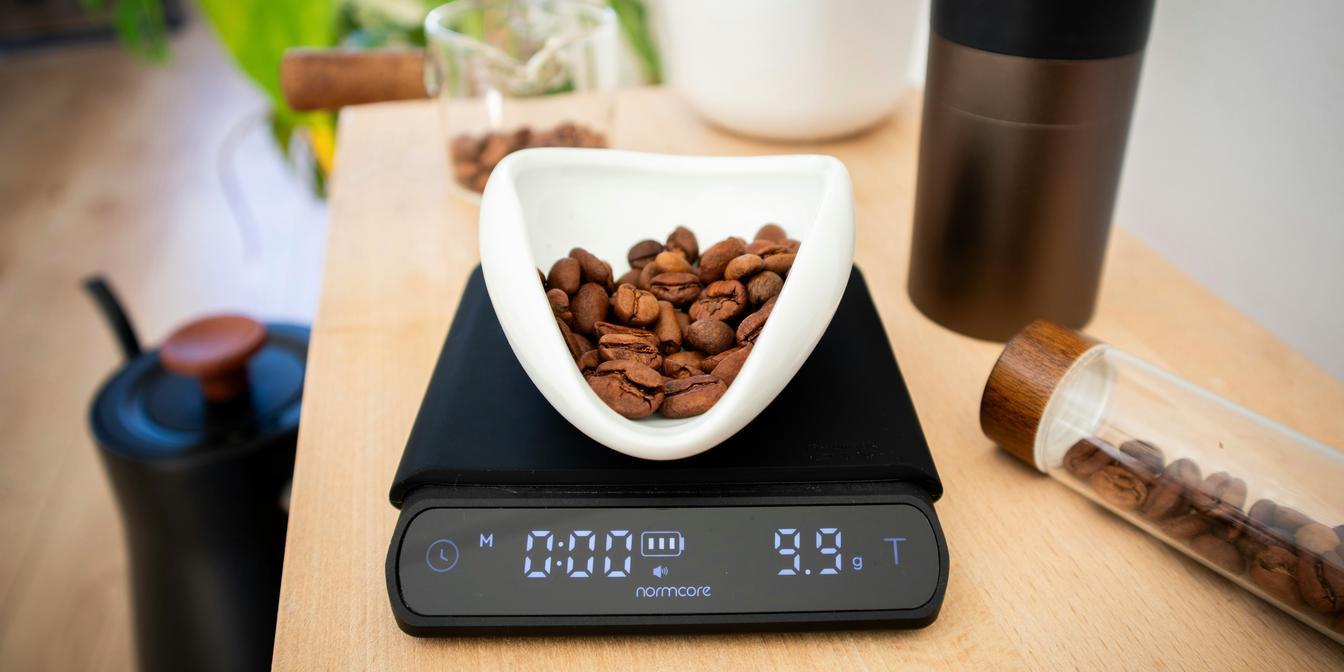
A more cautious approach is to begin with a small weighed serving, eat it consistently for several days and monitor the result before increasing it. Weight is more reliable than piece count because dried plums vary substantially in size and moisture content.
| Step | Practical approach | What to observe |
|---|---|---|
| Start small | Try about 25 to 30 grams once daily. | Changes in gas, comfort, urgency and stool form. |
| Stay consistent | Keep the same portion for several days rather than changing it after one meal. | Whether bowel movements become easier or more regular. |
| Adjust gradually | If needed and well tolerated, increase the serving in small increments. | Whether extra benefit is worth any increase in bloating or looseness. |
| Reduce if necessary | Return to the previous serving or pause if stools become watery or urgency develops. | Whether symptoms settle when the sorbitol and fibre load falls. |
Dried plums can be eaten alone or added to foods such as porridge, plain yoghurt or grain-based dishes. Chopping them does not remove their fibre or sorbitol, but it may make portion size less obvious, so measuring first can help.
A glass of water alongside the serving may be a comfortable routine, especially when increasing dietary fibre. However, forcing excessive quantities of water is not a guaranteed constipation remedy. Current guidelines note that evidence for extra fluid alone is limited, although avoiding inadequate fluid intake remains a sensible part of normal eating and drinking.
Judge the result by comfort as well as frequency. The goal is not the largest possible stool output or the greatest number of bowel movements. It is a sustainable pattern of comfortably formed stools without disruptive gas, pain, urgency or diarrhoea.
Whole Dried Plums Versus Prune Juice
Whole dried plums and prune juice are related but not nutritionally identical. Whole fruit retains its physical structure and more of the intact fibre associated with the fruit. Juice provides liquid and soluble components, including sorbitol, but generally does not deliver the same amount or mixture of fibre as an equivalent weight of whole fruit.
That does not mean prune juice has no effect. A placebo-controlled trial in adults with chronic constipation found that prune juice reduced hard, lumpy stools and increased normally formed stools without increasing loose or watery stools during the study. Because this was one particular product, population and trial design, the result should not be treated as a guarantee for every juice or serving. ([pubmed.ncbi.nlm.nih.gov](https://pubmed.ncbi.nlm.nih.gov/35971232/))
Whole dried plums may be preferable when the goal is to add a fibre-containing food. Juice may suit someone who finds whole fruit difficult to eat, but it is easier to drink a large dose quickly. Compare serving sizes carefully, and do not assume that a glass of juice and a handful of fruit will produce identical digestive effects.
Can Dried Plums Improve the Gut Microbiome?
Dried plums contain fermentable fibre and plant compounds that can reach or interact with the large intestine, so an effect on gut bacteria is biologically plausible. The question is whether human trials demonstrate a consistent, clinically meaningful improvement.
In the 120-person bowel-function trial, researchers measured selected bacterial groups, short-chain fatty acids and stool acidity. They found a difference involving bifidobacteria, but no significant effect on the other measured bacterial groups, short-chain fatty acids or stool pH. ([pubmed.ncbi.nlm.nih.gov](https://pubmed.ncbi.nlm.nih.gov/29398337/?utm_source=openai))
This is not strong enough evidence to say that prunes broadly transform the microbiome. It does suggest that further study is reasonable. Microbial responses may depend on a person’s starting diet, usual fibre intake and existing microbiota, and a change detected in a laboratory measurement does not necessarily translate into less bloating or better bowel function.
For now, it is fair to say that dried plums provide substrates that gut microbes may use. It is not fair to market them as a proven microbiome treatment or assume that more fermentation is always desirable.
Dried Plums, FODMAPs and Digestive Side Effects
Sorbitol is one of the fermentable carbohydrates grouped under the term FODMAPs. Plums and dried fruits can contribute a substantial FODMAP load, which is relevant for people with irritable bowel syndrome or known sensitivity to polyols.
When sorbitol is incompletely absorbed, it can retain water in the intestine and undergo bacterial fermentation. Possible results include:
- increased flatulence;
- abdominal bloating or distension;
- cramping or discomfort;
- urgency; and
- loose stools or diarrhoea.
These effects are dose-dependent for many people but not perfectly predictable. In the healthy-adult dried-plum trial, flatulence increased, while the prune-juice trial in people with chronic constipation did not find an increase in flatulence or diarrhoea. Differences in product, serving, population and study design may explain the contrast. ([pubmed.ncbi.nlm.nih.gov](https://pubmed.ncbi.nlm.nih.gov/29398337/))
If you are following a structured low-FODMAP diet, do not add a large daily prune serving simply because it is described as good for gut health. Food reintroduction and tolerance testing are intended to be individualised. People with persistent digestive symptoms may benefit from guidance from a qualified clinician or dietitian rather than removing or challenging multiple food groups independently.
How to Choose a Dried Plum Product
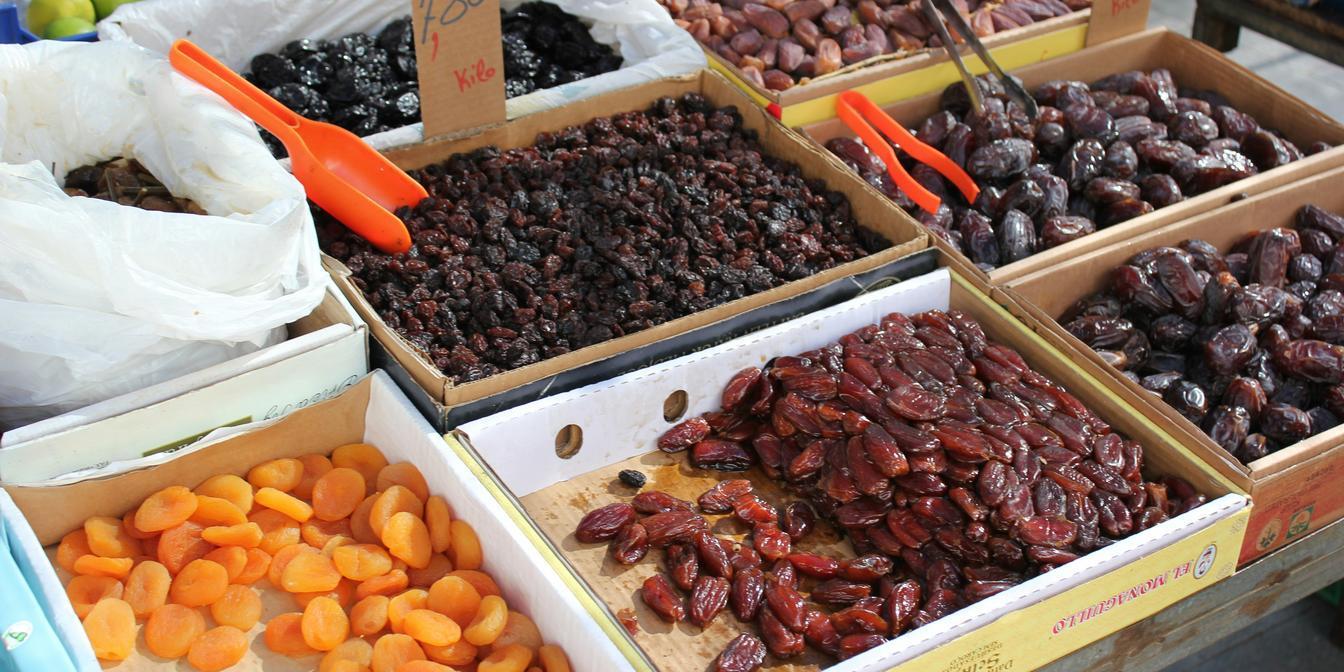
Start by identifying what the package actually contains. “Prunes” usually refers to dried plums, but products sold as Aloo Bukhara, Persian dried plums or sour dried plums may use different plum varieties, processing methods and serving conventions. Some may contain stones, seasonings or additional ingredients. Do not assume that every product called a dried plum matches the fruit used in prune trials.
Useful label details to compare include:
- Serving weight: grams provide a more consistent comparison than the number of fruits.
- Fibre per serving: this helps place the product within your total daily fibre intake.
- Ingredient list: check whether the package contains only dried plums or includes sweeteners, flavourings or other ingredients.
- Whole fruit or juice: these formats should not be treated as nutritionally interchangeable.
- Pitted or stone-in: confirm this before chopping, blending or serving the fruit.
Texture is mostly a matter of preference. Softer fruit may be easier to mix into meals, while drier fruit may encourage slower eating. Neither appearance nor a premium description proves that one product will be more effective for digestion.
Common Mistakes When Using Dried Plums for Digestion
Starting With a Large Serving
Jumping immediately to a trial-sized serving can introduce a substantial amount of fibre and sorbitol. Starting lower makes it easier to identify a tolerable amount and distinguish a useful stool-softening effect from excessive fermentation.
Counting Pieces Instead of Weighing the Portion
One dried plum is not a standard unit. Large, moist fruits can weigh considerably more than small, dry ones. A kitchen scale provides a clearer record when testing how a portion affects symptoms.
Changing Several Digestive Foods at Once
Adding dried plums, bran cereal, fibre supplements and other dried fruit on the same day makes the result difficult to interpret. Change one main variable at a time whenever possible.
Assuming Gas Means the Food Is “Detoxing” the Gut
Gas usually reflects fermentation and does not prove that toxins are leaving the body or that the microbiome is becoming healthier. Mild temporary gas may be tolerable; persistent pain, marked bloating or diarrhoea is a reason to reduce the portion and reconsider the approach.
Expecting Dried Plums to Correct Every Cause of Constipation
Low fibre intake is only one possible contributor to constipation. Medication effects, pelvic-floor dysfunction, changes in routine and medical conditions may require different assessment or management. More dried fruit is not necessarily the answer when symptoms persist despite reasonable dietary changes.
When Dried Plums May Not Be Enough
Dried plums are a food, not a diagnostic test or comprehensive treatment. Seek professional advice for constipation that is persistent, worsening or repeatedly returning, particularly when it is accompanied by rectal bleeding, unexplained weight loss, vomiting, severe abdominal pain or a sudden sustained change in bowel habits.
Professional guidance is also appropriate if digestive symptoms are leading you to avoid many foods, rely on increasingly large servings of prunes or regularly experience diarrhoea after trying to manage constipation.
The Bottom Line
Dried plums for digestion have a reasonable evidence base when the goal is to support stool output or bowel regularity. Fibre contributes bulk and water retention, while sorbitol provides an additional osmotic effect that can soften stools. The combined whole-food mechanism helps explain why prunes may work differently from a fibre supplement alone.
The limits matter just as much as the potential benefit. Dried plums do not necessarily shorten whole-gut transit time, have not shown consistent superiority to psyllium and cannot yet be described as a proven microbiome treatment. Because sorbitol and fermentable fibre can cause gas, bloating, urgency or diarrhoea, the most practical strategy is to begin with a small weighed portion, adjust gradually and judge success by comfort—not simply by frequency.
Frequently Asked Questions
Are dried plums and prunes the same thing?
Usually, yes. “Prune” is the common name for a dried plum, especially dried fruit from prune-type cultivars. Products labelled Aloo Bukhara, Persian dried plums or sour dried plums may use different varieties or processing methods, so check the ingredient list and serving weight.
How do dried plums help digestion?
They combine soluble and insoluble fibre with sorbitol. Fibre contributes stool structure, bulk and water retention, while incompletely absorbed sorbitol helps keep water in the bowel. Together, these effects may make stools softer or more frequent.
Is the fibre or sorbitol in dried plums more important?
Both are likely important, and research has not established a precise share of the effect for each. Fibre supports stool formation, while sorbitol adds an osmotic stool-softening action. Pectin and polyphenols may also contribute, but their independent effects remain uncertain.
Can dried plums improve the gut microbiome?
They provide fermentable fibre and plant compounds that may affect gut bacteria, but human evidence is limited. One trial found a change in bifidobacteria without broad changes in other measured bacteria, short-chain fatty acids or stool pH.
Can dried plums cause gas, bloating or diarrhoea?
Yes. Sorbitol can retain water in the bowel and be fermented by gut bacteria, potentially causing gas, bloating, urgency or loose stools. Risk generally increases with portion size, but individual tolerance varies.