Dried plums—better known as prunes—have attracted unusual attention in bone-health research. Several human trials suggest that eating them daily may help slow the loss of certain bone-density measures, particularly after menopause. That is promising, but it is not the same as proving that prunes rebuild osteoporotic bone or prevent fractures. This guide separates the strongest findings from the laboratory theories, secondary analyses and claims that run ahead of the evidence.
The short answer: can dried plums improve bone health?
The evidence supports a cautious “possibly.” The clearest finding comes from a 12-month randomized trial in which postmenopausal women eating 50 grams of prunes per day maintained total-hip bone mineral density better than a no-prune control group. The difference was modest and represented relative preservation rather than a dramatic increase in bone density. The 100-gram group did not show the same statistically significant hip result and had substantially more dropouts. (pubmed.ncbi.nlm.nih.gov)
A 2026 systematic review and meta-analysis found preliminary evidence of a small, borderline benefit at the lumbar spine, but no significant pooled differences at the hip, ulna or whole body. Bone formation and resorption markers also did not differ significantly overall, and results varied considerably among studies. (pubmed.ncbi.nlm.nih.gov)
The most accurate conclusion is therefore that daily prunes may help preserve selected measures of bone density in some people, with the best evidence currently applying to postmenopausal women. No prune trial has demonstrated fewer hip, vertebral or other fragility fractures. Dried plums should not replace a DXA scan, clinical fracture-risk assessment or prescribed osteoporosis treatment. Effective osteoporosis therapies have direct evidence for reducing fractures; prunes do not yet have that level of evidence. (pmc.ncbi.nlm.nih.gov)
Dried plums, prunes, and aloo: are they the same thing?
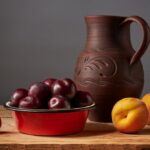
In everyday English, a prune is a dried plum. In research, however, the description is more specific. Most bone-health trials studied prunes from Prunus domestica. The large Prune Study used California prunes of the “Improved French” variety and standardized the intervention by weight. (ajcn.nutrition.org)
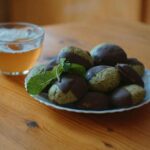
Products labeled dried plum, aloo or Aloo Bukhara may differ in plum variety, moisture, preparation, pit status, added ingredients and the weight of each piece. For example, Saharkhiz dried plums labeled Aloo Bukhara and Persia Food dried plum, also called aloo, are sold as dried fruits for snacking or cooking. Their names do not establish that they are compositionally identical to the standardized prunes used in a clinical trial.
This distinction matters when translating research into practice. “Six pieces” of a small, pitted prune may weigh considerably less than six larger or moister dried plums. If someone wants to reproduce the amount used in a study, weighing the edible portion is more reliable than relying on a product name or fruit count.
Why bone health changes with age
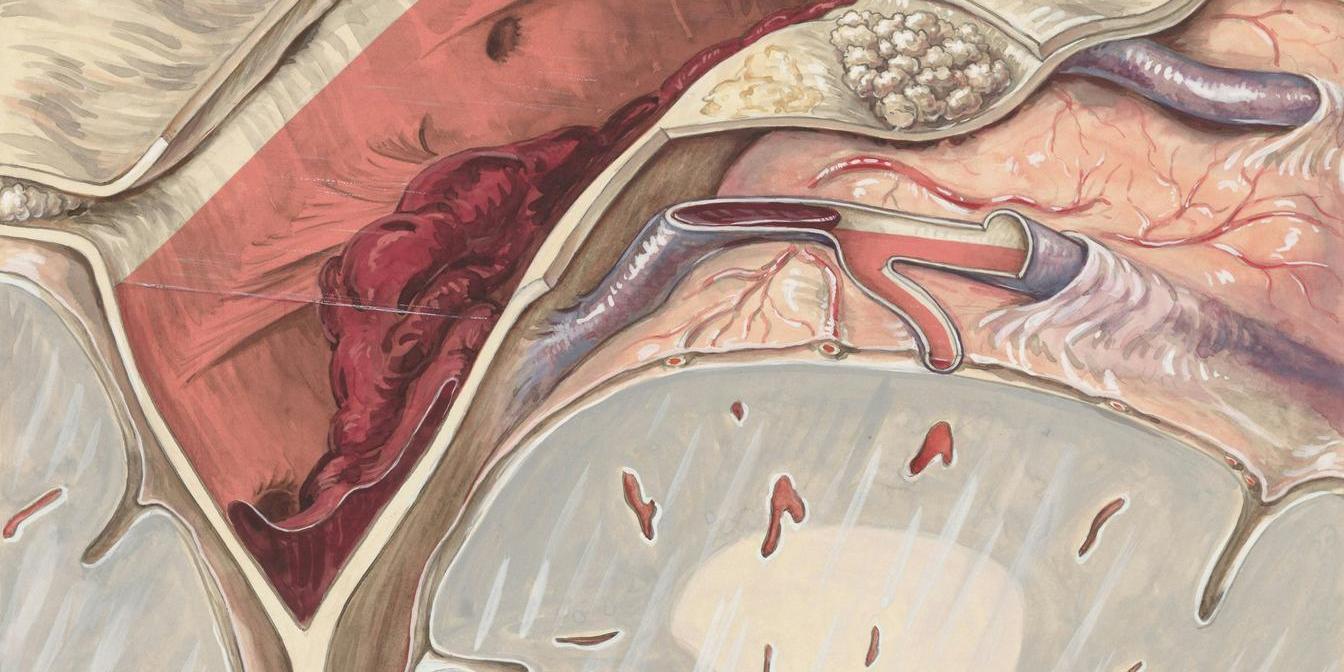
Bone is living tissue that is continuously renewed through bone remodelling. Osteoclasts remove older or damaged bone, while osteoblasts form new bone. When formation replaces what has been removed, bone mass can remain relatively stable. When resorption repeatedly exceeds formation, net bone loss occurs. (ncbi.nlm.nih.gov)
Age, hormones, physical loading, nutrition, medicines and medical conditions can all influence that balance. Around menopause, declining estrogen is associated with faster remodelling and greater osteoclast activity, so bone resorption can outpace bone formation. The rate and clinical significance of bone loss vary between individuals, which is why personal risk factors and objective measurements matter more than age alone. (ncbi.nlm.nih.gov)
Bone density, bone strength, and fractures are not interchangeable
Prune studies report several different outcomes, and they should not be treated as equivalent:
- Bone mineral density (BMD) is commonly measured at the hip and spine with dual-energy X-ray absorptiometry, or DXA. It is an important part of osteoporosis assessment, but it does not capture every feature that contributes to bone strength.
- Bone turnover markers, such as P1NP, CTx or TRAP-5b, reflect aspects of bone formation or resorption. They can change faster than BMD, but a favorable biomarker shift does not by itself demonstrate stronger bones or fewer fractures.
- Volumetric density, geometry and estimated strength can be examined with technologies such as peripheral quantitative computed tomography. Measures such as the stress–strain index are calculated estimates, not tests in which researchers observe whether a bone actually fractures.
- Fracture outcomes count real hip, spine, wrist or other fractures. These are the outcomes that matter most clinically, but they generally require larger and longer trials than the prune studies completed so far.
Likewise, a modeled FRAX risk score is not the same as observing a reduction in fractures. A trial can produce interesting changes in BMD, biomarkers or calculated risk without proving that the intervention prevents broken bones. (pmc.ncbi.nlm.nih.gov)
What nutrients and compounds in dried plums could matter?
Dried plums provide a mixture of vitamin K, potassium, copper, fibre, sorbitol and polyphenolic compounds. A compositional estimate used in a human trial reported that a 50-gram serving provided approximately 3.6 grams of fibre, 366 milligrams of potassium, 29.8 micrograms of vitamin K, 0.14 milligrams of copper, 21.5 milligrams of calcium and 1.1 grams of protein. Exact values vary by product and preparation. (pmc.ncbi.nlm.nih.gov)
Vitamin K participates in the production of proteins involved in bone metabolism, including osteocalcin. That makes it biologically relevant, but it does not prove that the vitamin K in prunes is responsible for the trial findings. Research on vitamin K intake, supplements, BMD and fracture risk has produced mixed results. (ods.od.nih.gov)
Potassium and copper also have normal physiological roles, while fibre, sorbitol and polyphenols may affect the intestinal environment. However, no human trial has isolated one component and shown that it fully explains a prune effect. The whole food could act through several small pathways, or apparent benefits could depend on the background diet, baseline bone density and characteristics of the individual.
Dried plums are also not a major standalone source of calcium or protein. In several trials, participants received calcium and vitamin D in addition to their assigned prunes or control diet. The studies therefore do not show that prunes can substitute for adequate calcium, vitamin D, protein or other parts of a complete eating pattern. (pubmed.ncbi.nlm.nih.gov)
Polyphenols, inflammation, and bone remodelling
One proposed mechanism involves dried-plum polyphenols. Laboratory and animal research suggests that these compounds could influence oxidative stress, inflammatory signaling and pathways that regulate osteoblasts and osteoclasts. Researchers have hypothesized that reducing pro-inflammatory signals could help limit excessive bone resorption after menopause. (pubmed.ncbi.nlm.nih.gov)
This remains a mechanism hypothesis rather than a settled clinical explanation. Results obtained in cultured cells or animals cannot establish what happens after a person eats whole prunes, digests them and metabolizes their compounds. Human trials have not consistently shown changes in inflammatory markers or bone-turnover markers, and the 2026 meta-analysis found no significant pooled effect on markers of bone formation or resorption. (pubmed.ncbi.nlm.nih.gov)
The gut microbiome hypothesis
A post-hoc analysis of the Prune Study compared women whose total-hip BMD increased by at least 1% with women whose BMD fell by at least 1%. The groups differed in several gut-microbial characteristics, and the responders had lower levels of selected inflammatory markers after the intervention. (pubmed.ncbi.nlm.nih.gov)
These observations are exploratory. The analysis selected small responder and non-responder subgroups after the trial, baseline hip density differed between them, and it cannot show that particular microbes caused the bone response. Microbiome testing cannot currently predict whether an individual will benefit from prunes.
What the clinical trials actually found
The table below summarizes the major peer-reviewed human studies. An important pattern is that positive findings have been site-specific and have not appeared consistently across doses, populations or measurement methods.
| Study and population | Intervention | Main findings | Key limitations |
|---|---|---|---|
| 2002: 58 postmenopausal women | 100 g dried plums or 75 g dried apples daily for 3 months | The prune group had increases in selected bone-formation indicators, but the study did not establish a BMD or fracture benefit. | Short duration, small sample and biomarker-focused outcomes. (pubmed.ncbi.nlm.nih.gov) |
| 2011: 160 postmenopausal women randomized | 100 g dried plums or 75 g dried apples daily for 12 months; calcium and vitamin D were provided | Spine and ulna BMD were higher in the dried-plum group than in the dried-apple group, with decreases in selected turnover markers. | Substantial attrition, one high prune dose and a dried-fruit comparison rather than a no-food placebo. (pubmed.ncbi.nlm.nih.gov) |
| 2016: 48 older postmenopausal women with osteopenia | 50 g, 100 g or no prunes for 6 months | Both prune doses preserved total-body BMD relative to control and reduced TRAP-5b, a resorption marker. | Very small groups, six-month duration and no fracture outcomes. (pubmed.ncbi.nlm.nih.gov) |
| 2022 Prune Study: 235 postmenopausal women | 50 g, 100 g or no prunes for 12 months; calcium and vitamin D intake was standardized | The 50 g group maintained total-hip BMD better than control. Broad benefits were not found at the total body, lumbar spine, femoral neck or trabecular bone score. | Single center, modest site-specific effect and high attrition in the 100 g group. (pubmed.ncbi.nlm.nih.gov) |
| 2024: 90 young women assigned by oral-contraceptive status and prune intake | 50 g prunes daily for oral-contraceptive users versus groups without prunes | No significant group differences in DXA BMD at the main skeletal sites. Limited peripheral-bone findings were considered suggestive rather than conclusive. | Small, single-center trial with group differences and no fracture outcomes. (pmc.ncbi.nlm.nih.gov) |
| 2026: older men with low or at-risk BMD | 50 g, 100 g or no prunes for 12 months; groups received calcium and vitamin D | Prunes did not improve total or lumbar-spine BMD beyond the control regimen. Differences in selected biomarkers were exploratory. | Small sample and limited skeletal endpoints, but it cautions against assuming that findings in postmenopausal women apply to men. (pubmed.ncbi.nlm.nih.gov) |
Early studies in postmenopausal women
The early trials provided the initial signal that prompted larger research. The three-month study was useful for generating hypotheses because bone markers can reveal changes sooner than a DXA scan. Its results could not show that bones became denser or that fracture risk fell. (pubmed.ncbi.nlm.nih.gov)
The 2011 study lasted long enough to measure BMD and reported benefits at the spine and ulna compared with dried apples. However, the evidence was less uniform at other sites, and only 100 of the 160 randomized participants were represented as completers in the later systematic review. Its 100-gram daily dose was also demanding. (pubmed.ncbi.nlm.nih.gov)
The small 2016 dose-comparison trial was notable because 50 grams appeared to work about as well as 100 grams for its primary observations. It helped establish the lower amount that was subsequently tested in the larger Prune Study. (pubmed.ncbi.nlm.nih.gov)
The 12-month Prune Study

The Prune Study randomized 235 women aged 55 to 75 to a no-prune control group, 50 grams of prunes per day or 100 grams per day. Participants had eligible DXA T-scores between 0 and −3 at one or more measured sites. Calcium and vitamin D intake was supplemented as necessary to reach the protocol targets, helping reduce differences in those nutrients between groups. (ajcn.nutrition.org)
After 12 months, total-hip BMD had fallen by an average of 1.1% in the control group and 0.3% in the 50-gram group. The statistically significant result therefore reflected slower loss at the hip, not a large increase in density. The study did not demonstrate a significant intervention effect at the lumbar spine, femoral neck, total body or trabecular bone score. (pubmed.ncbi.nlm.nih.gov)
The 100-gram group did not show a significant total-hip advantage over control. Forty-one percent of participants assigned to that dose dropped out, compared with 15% in the 50-gram group and 10% among controls. This does not prove that 100 grams is ineffective, but it makes the result harder to interpret and demonstrates the practical importance of adherence. (pubmed.ncbi.nlm.nih.gov)
Research on cortical bone and estimated strength
A secondary analysis used peripheral quantitative computed tomography to examine three-dimensional density, geometry and calculated strength at the tibia and radius. When the two prune groups were pooled, cortical volumetric density and estimated strength at a weight-bearing section of the tibia were maintained while they declined in controls. (pubmed.ncbi.nlm.nih.gov)
These findings add information that a two-dimensional DXA scan cannot provide, but they remain secondary outcomes from the same single-center trial. The stress–strain index is an estimate derived from bone geometry and density. It is not evidence that participants experienced fewer real-world fractures.
What the research does not yet prove
- Fracture prevention: The studies were not large or long enough to determine whether prunes prevent hip, vertebral or other fractures.
- Reversal of osteoporosis: Preserving one BMD measure relative to a control group is not the same as reversing an osteoporosis diagnosis.
- A universal response: Findings are concentrated in postmenopausal women, and newer research in older men did not find a broad BMD benefit. (pubmed.ncbi.nlm.nih.gov)
- A clear best dose: Fifty grams has been more practical and produced the strongest hip result, but the evidence does not establish an optimal dose for every person.
- A proven mechanism: Polyphenols, inflammatory pathways and the microbiome are plausible explanations, not confirmed mediators of fracture protection.
- Complete independence of the evidence base: Multiple prominent trials were funded by or received prunes from the California Prune Board. The Prune Study reported that the board had no role in data collection, analysis or manuscript preparation, but industry support remains relevant when judging the need for independent replication. (sciencedirect.com)
The 2026 meta-analysis included 11 eligible reports and 747 participants, but several reports were secondary analyses or publications drawn from the same underlying participant cohorts. The number of genuinely independent, large clinical trials is therefore smaller than the paper count suggests. High statistical heterogeneity also means the pooled estimate should be interpreted cautiously. (pubmed.ncbi.nlm.nih.gov)
How much did participants eat?
The most relevant amounts are 50 grams per day and 100 grams per day. In the Prune Study, 50 grams corresponded to roughly four to six prunes and 100 grams to approximately 10 to 12, but piece counts vary. The clinical protocols generally used the edible weight of standardized, pitted prunes. (pmc.ncbi.nlm.nih.gov)
Fifty grams is the most defensible amount to discuss because it produced the strongest total-hip result and had better retention than 100 grams in the largest trial. That does not make it a formally established treatment dose. It is simply the best-studied practical amount for postmenopausal bone-density preservation.
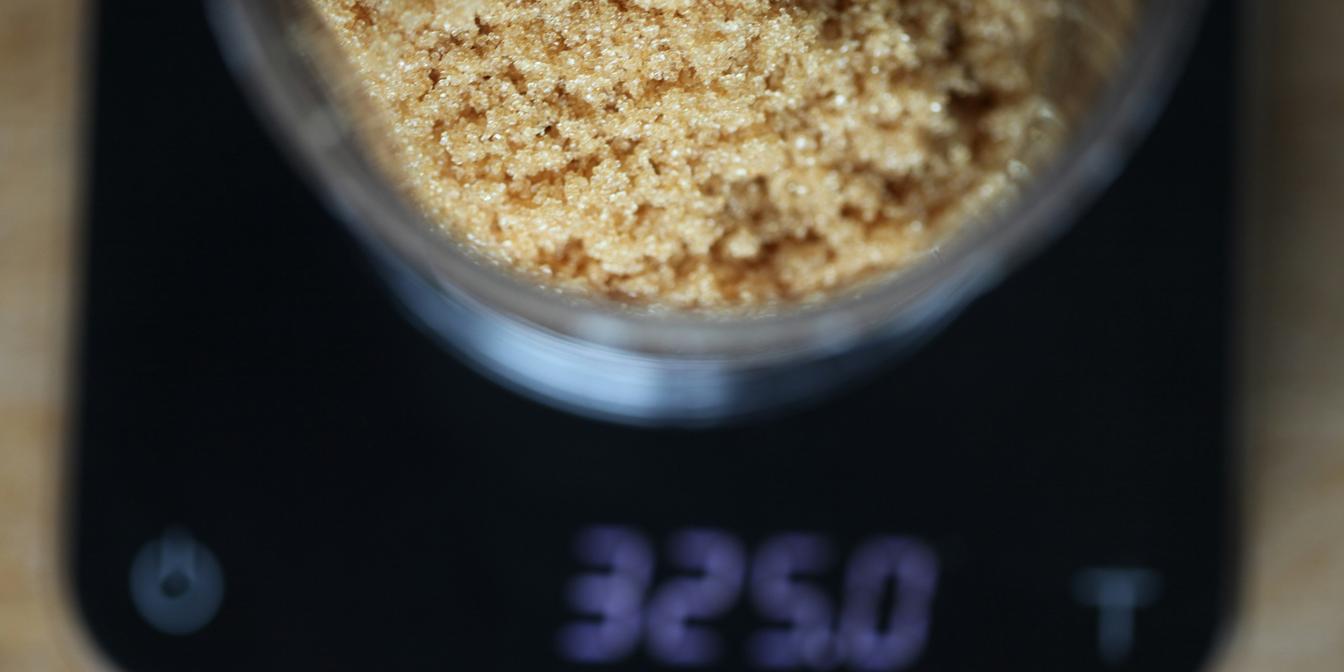
A kitchen scale is the clearest way to compare a product with the research dose. Package size can provide additional context: a 30 g Hampa dried plum snack, for example, is a smaller portion than the 50 grams used in the main bone-health trials.
Study protocols commonly increased prune intake gradually rather than beginning with the full amount on day one. Participants could divide the portion across meals. Practical options include chopping dried plums into oatmeal or yogurt, eating them with nuts, adding them to grain dishes and salads, or using them in savory stews.
Common mistakes when applying the research
- Counting pieces without checking their weight.
- Assuming every aloo, Aloo Bukhara or dried-plum product matches the studied prune variety.
- Interpreting “preserved BMD” as “rebuilt bone.”
- Expecting to feel a change in bone density without objective assessment.
- Adding prunes while overlooking the rest of the diet, physical activity, fall risk or prescribed treatment.
- Choosing 100 grams because more seems better, despite the weaker adherence and lack of a clearer benefit in the largest trial.
Dried plums belong in a broader bone-health plan
Even if future trials confirm a modest prune effect, bone health depends on more than one food. Clinical guidance emphasizes adequate calcium, vitamin D and protein; weight-bearing and resistance exercise; balance and fall prevention; avoidance of smoking; and appropriate evaluation and treatment for people at increased fracture risk. (pmc.ncbi.nlm.nih.gov)
Dried plums can fit into that pattern as a fruit serving or cooking ingredient. They should complement rather than displace calcium- and protein-containing foods. People with low bone density, a previous low-trauma fracture, significant height loss or concerns about osteoporosis should base decisions on a healthcare assessment rather than relying on dietary experiments alone.
Bottom line: The human evidence offers a credible but limited signal that approximately 50 grams of prunes per day may slow loss of total-hip BMD in postmenopausal women. Results at other skeletal sites are inconsistent, evidence in other populations is sparse or negative, and fracture prevention has not been demonstrated. Prunes are a reasonable food to include if enjoyed, but they are not a substitute for osteoporosis screening, a complete bone-supportive lifestyle or treatment when treatment is indicated.
Frequently Asked Questions
Are dried plums and prunes the same thing?
A prune is a dried plum, but products can differ by plum variety, moisture, processing, pit status and serving weight. Most bone-health trials used standardized prunes from Prunus domestica, so another product labeled aloo or dried plum should not automatically be considered identical.
How many dried plums did bone-health studies use per day?
The main trials used 50 or 100 grams daily. In the largest study, 50 grams was approximately four to six standardized prunes and 100 grams was about 10 to 12, although weighing is more reliable than counting. (ajcn.nutrition.org)
Can eating prunes reverse osteoporosis?
There is no evidence that prunes reverse osteoporosis. Some trials suggest they may slow the loss of selected BMD measures, but they should not replace clinical assessment or prescribed osteoporosis treatment.
Do dried plums prevent hip fractures?
This has not been demonstrated. One trial found better preservation of total-hip BMD with 50 grams daily, but no trial was designed to show a reduction in actual hip fractures. (pubmed.ncbi.nlm.nih.gov)
Are dried plums a good source of calcium?
They contain some calcium but are not a major calcium source. One clinical-trial estimate listed about 21.5 milligrams in 50 grams of prunes, and several bone studies provided calcium and vitamin D separately. (pmc.ncbi.nlm.nih.gov)