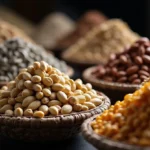
What are Middle East Superfoods?
Wondering what’s so special in this? Well, I will explain. Middle East superfoods have played an important role in traditional diets for thousands of years. These not only provide nourishment but also offer numerous health benefits. You can even find them in ancient texts and religious scriptures. These foods can grow in the hot, dry climate of the Middle East, making them naturally adaptable and nutrient food. Modern science supports these ingredients in proving that they are great for maintaining heart health, digestion, immunity, and overall wellness for our body.Let me introduce some of the most powerful superfoods.1 Dates (The Energy Booster)
You all are familiar with this right?Due to its natural sweet flavor, dates are also referred to as ‘nature’s candy’. Dates are considered as the oldest cultivated fruits. These small wrinkled fruits are packed with essential nutrients that make them a powerhouse of energy. One date has about 20–23 calories, 0.17–0.2 grams of protein, 5.3–6 grams of carbohydrates, 0.6 grams of fiber. Let’s get into the main part,Nutritional Benefits- High in Fiber: Supports digestion and helps with regulating blood vessels.
- As Antioxidants: Fights inflammation and boosts overall health.
- Natural Sugars: Provides a quick pick-me-up without artificial sugars.
- Digestive Support: Has excellent fiber content that helps digestion.
- Mineral rich: Contain potassium, magnesium, and iron
- Snack: Can be enjoyed as a sweet snack
- Smoothies: Can blend into smoothies
- Baking: Using in bakes and desserts
- Traditional dishes: Add to Middle Eastern dishes like stuffed dates or tagines.
2 Figs (Nature’s Sweet Treat)
Have you tried figs? If not, you are missing out! These soft, chewy fruits are packed with nutrients used for centuries. This is recommended as a traditional ingredient for many health problems as it has high fibre content. The interesting fact is, the fig plant grows only till 7-10 m. The other is raw fig contains 80% water and 20% carbohydrates. Let’s know more about nutritional value of pomegranates,Nutritional Benefits:- High in Fiber: Supports digestive health.
- Vitamins and Minerals: Rich in vitamins A, B1, B2, and minerals like potassium, calcium, & iron.
- Heart Health: The potassium in figs helps regulate blood pressure levels.
- Antioxidant Properties: Have antioxidants that help fight free radicals in the body.
- Fresh or Dried: Enjoy as a snack or add to salads.
- With Cheese: Pair with cheese for a delightful appetizer.
- Desserts: Incorporate into cakes, tarts, and other desserts.
3 Pomegranates (The Antioxidant Powerhouse)
Here comes the most popular one.Pomegranates are nature’s little treasure chats, with ruby red jewels. You know, pomegranates are not just beautiful, they are one of the healthiest fruits on the planet. Packed with juicy seeds, loaded with vitamins and antioxidants that do wonders for your body. Pomegranates contain around 1.46 – 4.7 grams of protein, depending on the serving size.Now, to the best part,Nutritional Benefits:- Vitamins C and K: Immune function and bone health.
- Antioxidants & Polyphenols: Reduce inflammation and protect against heart disease.
- Heart Health: Improve cholesterol levels & blood pressure.
- Anti-Inflammatory: Reduce inflammation and lower the risk of chronic diseases.
- Fresh Juice: Used a refreshing drink.
- Salads: Sprinkle seeds over salads for added crunch and flavor.
- Traditional Dishes: In dishes like Fesenjan, a Persian stew made with its paste & walnuts.
4 Pistachios (The Protein-Rich Snack)
This has a membership in cashew family.They are more than a treat; it is a Middle Eastern superfoodpacked with protein and nutritions. It is believed that, in the first century AD, Romans introduced pistachio trees from Asia to Europe. Pistachios are cultivated across Southern Europe and North Africa. Ten pistachios usually contain 40–50 calories.Let’s checks its healthy side,Nutritional Benefits:- High Protein: Supports muscle growth and repair.
- Healthy Fats: Contains monounsaturated and polyunsaturated fats.
- Essential Amino Acids: Provides the building blocks for proteins in the body.
- Weight Management: Combination of protein, fiber, and healthy fats promotes satiety.
- Blood Sugar Control: Helps to maintain stable blood sugar levels.
- Snacking: Enjoy a handful as a nutritious snack.
- Baklava: Key ingredient in this traditional Middle Eastern dessert.
- Savory Dishes: Incorporate into pilafs, salads, and crusts for meats.
5 Sesame Seeds & Tahini (The Nutrient-rich Condiment)
Sesame is once described in a cuneiform document which was written 40,000 years ago, describing the custom of serving gods sesame wine. And Tahini is a thick substance made from the sesame seeds. It is a staple in Persian and Arabic healthy foods.100 grams of sesame seeds have 16.9g of protein, 26g of carbohydrates, 16.9g of dietary fiber.Time to know more,Nutritional Benefits:- Rich in Healthy Fats: Supports heart health and provides energy.
- Calcium and Plant-Based Protein: Essential for bone health and muscle function.
- Bone Health: Have high calcium content that supports strong bones.
- Skin Health: Antioxidants and healthy fats promote glowing skin.
- Tahini in Hummus: A primary ingredient in this popular dip.
- Dressings: Incorporate into salad dressings for a nutty flavor.
- Traditional Sweets: Used in desserts like Halva.