Buying Persian saffron in the UK can feel surprisingly complicated. Packages may use terms such as Negin, Sargol, Pushal, Iranian saffron or zafaran, yet those names do not always tell you everything about freshness, authenticity or suitability for a particular recipe. The best choice depends on what is actually in the pack, how clearly it is labelled and how you intend to use it.
This guide explains the principal saffron grades UK shoppers encounter, what real saffron threads should look and smell like, and which packaging details deserve attention. It also covers correct storage, two straightforward blooming methods and practical ways to use saffron in rice, savoury dishes, desserts and drinks.
What Is Persian Saffron?
Saffron consists of the dried stigmas of Crocus sativus, a purple-flowered crocus cultivated for its aromatic red threads. Each flower produces only a small quantity of usable saffron, so the stigmas must be collected and carefully separated before drying.
In Persian cooking, saffron is used as both an aroma and a flavouring. Its colour is important, but it is only one part of its contribution. Properly prepared saffron can give rice, khoresh, sweets and drinks a distinctive fragrance and a layered flavour that cannot be reproduced simply by adding yellow food colouring.
The terms Persian saffron and Iranian saffron generally refer to the same geographic tradition. “Persian” is often used in a culinary or cultural context, while “Iranian” usually identifies the modern country of origin. Zafaran, also written as zaferan or za’faran, is another name for saffron encountered on Persian and Middle Eastern labels.
None of these words alone guarantees a particular grade or laboratory result. A Persian-style design does not necessarily establish origin, and Iranian origin does not tell you whether a pack contains Negin, Sargol, Pushal or another form. The complete label and the condition of the threads matter more than a single prominent word on the front.
Why Saffron Is Known as Red Gold
Saffron is frequently called “red gold” because producing a small amount requires many flowers and a considerable amount of careful manual work. The flowers must be harvested, the delicate stigmas separated and the resulting threads dried without losing their desirable characteristics. This high input relative to the finished weight helps explain why saffron is sold in grams rather than in the larger bags associated with many everyday spices.
That context is also useful when shopping. An implausibly cheap, poorly documented pack deserves scrutiny, but a high price does not prove authenticity either. Buyers should assess origin information, labelling, thread condition, pack integrity and the retailer together. For more cultural and culinary context, see this closer introduction to Persian saffron.
What Persian Saffron Tastes and Smells Like
Good saffron has a complex aroma that people variously describe as floral, honeyed, warm, grassy or earthy. Its flavour is gently bitter and aromatic rather than simply sweet. Because it contains several interacting aromatic and flavour compounds, individual cooks may notice different aspects first.
Saffron should not smell like ordinary perfume or taste overwhelmingly metallic. A weak aroma can indicate age, unsuitable storage or simply a mild product, while an aggressive artificial smell should prompt caution. Aroma is easiest to assess once a few threads have been gently crushed and bloomed, but opening a package before purchase is usually neither possible nor appropriate. That makes trustworthy labelling and a well-sealed pack particularly valuable.
Persian Saffron Grades and Types Explained
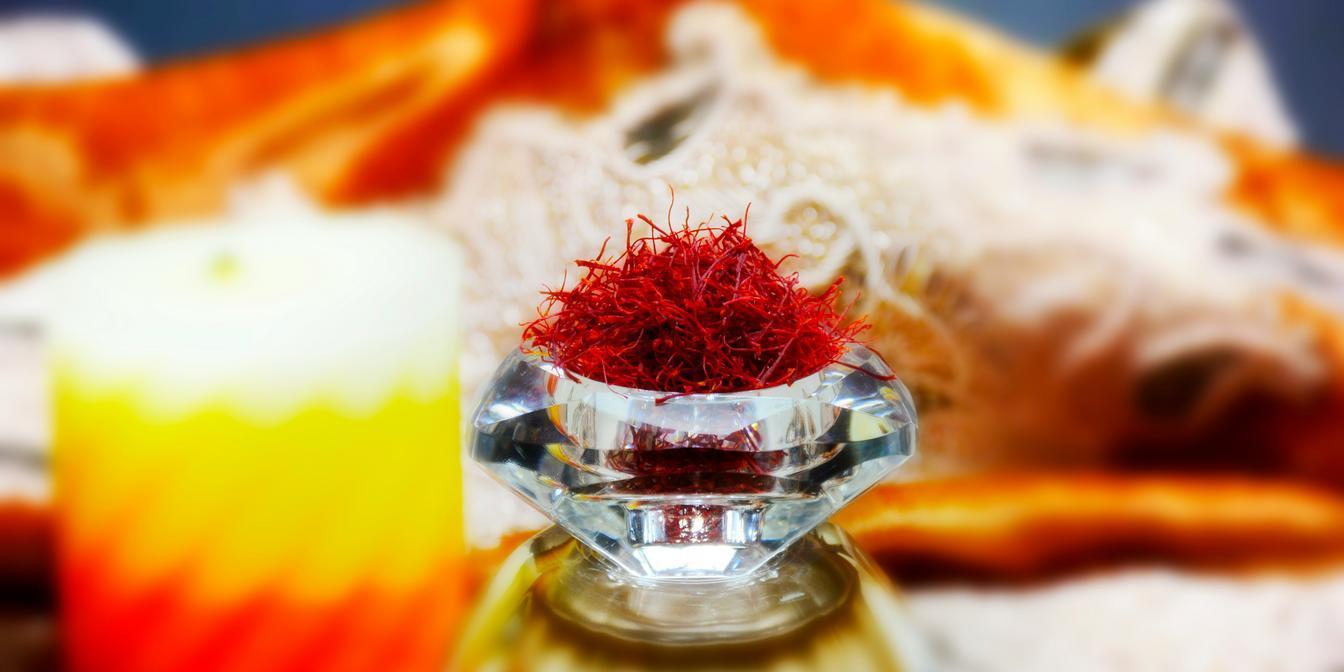
Saffron grades are largely descriptions of which parts of the stigma and style have been retained, how the threads have been separated and how they appear. Origin, grade and laboratory quality measurements are related considerations, but they are not interchangeable.
For example, a pack may have long, visually impressive red threads and still need to be judged on freshness, aroma, storage and accurate labelling. Conversely, saffron containing some pale style material may be perfectly suitable for cooking even though it produces a less uniformly red presentation. Commercial terminology can also vary between producers, so use the grade name as the beginning of your assessment rather than the final verdict.
Negin and Super Negin
Negin saffron generally consists of long, separated threads that are predominantly red, with little pale style material visible. The threads are selected and arranged to create a clean, uniform appearance. Super Negin is commonly used for especially long, straight or visually consistent selections, although the exact distinction is not identical across every seller.
These grades appeal when presentation matters. Long red threads look attractive in a transparent container and can make a thoughtful culinary gift. Their appearance is also useful when a cook wants to place visible threads on a finished dish. However, a premium-sounding name should not replace basic checks such as stated origin, net weight, date information and pack condition.
Sargol
Sargol saffron is made from separated red stigma tips, with most or all of the paler style removed. The pieces are usually shorter than long-form Negin threads, but their predominantly red appearance makes Sargol a popular culinary option. It is convenient for grinding and blooming because the threads are normally used for their colour, aroma and flavour rather than for visual display.
It is tempting to assume that every Sargol pack must be better than every Pushal or Dasteh pack, but grade names do not account for age, handling or storage. A clearly labelled, well-kept pack of one grade may be a more sensible purchase than a poorly documented pack carrying a more prestigious name.
Pushal
Pushal saffron generally retains the red stigma together with a small amount of orange or yellow style material. This produces threads with more visible colour variation than Negin or Sargol. The attached style can also make the structure of the original stigma easier to recognise.
Because some pale material remains, a gram of Pushal does not contain exactly the same proportion of red stigma as a gram of an all-red grade. That does not make it unsuitable for everyday cooking. It simply means shoppers should consider composition when comparing packs by weight and should not expect the same uniformly crimson appearance.
Dasteh or Bunch Saffron
Dasteh saffron, sometimes called bunch saffron, retains a larger portion of the stigma and its pale style. The threads are traditionally kept together or arranged in a bundle, showing a transition from deep red through orange to yellow or cream.
This whole-stigma presentation has a distinctive, traditional appearance and makes the different parts easy to see. The practical purchasing consideration is weight: the pale style forms a larger proportion of the pack than it does in Sargol or Negin. Compare like with like rather than judging only by total grams.
Threads Versus Ground Saffron
Whole saffron threads are usually the most practical choice for careful buyers. They allow you to inspect the shape, colour variation and general condition before use. Threads also make it easier to grind or bloom only the amount required while keeping the remainder intact and protected.
Ground saffron can be convenient because it disperses quickly, but visual inspection becomes much harder once the spice has been powdered. A sealed powder from a source you trust may be perfectly useful; an unlabelled powder with unclear origin gives you far less information. Ground saffron also exposes more surface area to air, so careful storage becomes especially important.
How to Choose Authentic Persian Saffron in the UK
Whether you are shopping online, in a Persian grocery shop or at a supermarket, use a repeatable checklist. No single visual trick can conclusively establish authenticity at home, but several consistent checks can help you make a better-informed purchase.
Check the Country of Origin and Product Label
Begin with the factual information rather than the decorative packaging. Look for a clearly stated country of origin, net weight, producer or packer details, relevant date information and storage guidance. The package should identify what you are buying rather than relying entirely on Persian motifs or vague phrases such as “premium quality.”
If a grade is stated, check whether the visible contents broadly correspond to that description. A product labelled as an all-red grade should not appear to contain a large proportion of yellow style material. When buying online, the product description should be sufficiently specific to distinguish threads from powder and to explain the pack size.
The same label-first approach is useful across a wider Persian pantry. This guide to essential Persian cooking ingredients in the UK explains what to check when choosing rice, dried limes, herbs, pulses and other staples alongside saffron.
Inspect the Threads, Colour and Condition
Real saffron threads are irregular botanical material, not perfectly identical manufactured strands. Look for dry, separate or naturally tangled threads with some variation in length and shape. Depending on the grade, the dominant colour should range from deep red to red-orange, with varying amounts of paler style.
Colour alone cannot prove authenticity. Genuine grades naturally differ, photographs can be edited, and red-looking material can still be misrepresented. Treat an intense crimson colour as one observation rather than a complete test. Also check for excessive dust, obvious dampness, clumping or large amounts of unrelated plant material.
Consider Aroma Without Expecting a Simple Smell
If you can legitimately assess an opened sample, expect a concentrated and complex aroma rather than the familiar smell of one common kitchen ingredient. Floral, warm, earthy and hay-like impressions can coexist. The aroma should not depend on an overpowering added fragrance.
For sealed online purchases, aroma cannot be assessed in advance. Product information, packaging and retailer credibility therefore carry more weight. A useful guide to buying Persian groceries online can help you evaluate product pages, pack details and specialist retailers without relying on photographs alone.
Choose a Pack Size You Can Use and Store Well
Saffron is used in small quantities, so the largest pack is not automatically the best value for every household. Occasional cooks may prefer a small pack that can be used while its aroma remains expressive. Frequent Persian cooks or households preparing large rice dishes may find a larger format more practical, provided it can be kept airtight and away from light.
For example, Golestan Khatam Design Saffron Threads 1g is a small-format thread pack suited to shoppers who want a modest quantity. A household using saffron more regularly might consider Golestan Iranian Saffron Half Mesghal, which contains approximately 2.3g. The traditional unit “mesghal” may also appear on larger packs; Golestan Iranian Saffron 1 Mesghal, for instance, is approximately 4.6g.
Choose according to realistic use rather than buying more solely because the pack appears economical. A smaller quantity stored correctly can be a better kitchen purchase than a large package repeatedly exposed to air, steam and bright light.
Use Home Tests Cautiously
Online advice sometimes presents water tests, rubbing tests or thread-shape checks as definitive proof. They are not. Genuine saffron releases colour into liquid, but the speed varies with water temperature, thread condition, grinding and grade. Some misleading materials may also release colour, while a genuine thread can look different after processing.
A flared or trumpet-like end and natural variation can support a visual assessment, but even these characteristics do not replace traceable packaging and reliable sourcing. Avoid destructive tests involving flames or tasting large amounts. The most useful approach is to combine labelling, seller information, thread inspection, aroma after opening and cooking performance over time.
How to Store Saffron Threads Correctly
Saffron’s main storage enemies are light, moisture, heat, air and repeated exposure to strong kitchen conditions. Keep the threads in a tightly closed container in a cool, dry and dark cupboard, away from the cooker, kettle, dishwasher and direct sunlight.
Choose a Small, Well-Sealed Container
A small glass jar with a reliable lid or a tightly closing metal container works well. Opaque packaging offers extra protection from light; if the jar is transparent, keep it inside a closed cupboard. A container that closely matches the quantity of saffron also reduces the amount of air enclosed with the threads.
Retain the original label or record the product name and relevant date information when transferring saffron to another jar. This prevents an attractive but anonymous collection of spices from becoming impossible to identify later.
Keep Moisture and Steam Out
Always use a clean, completely dry spoon or dry fingertips. Do not hold an open saffron jar over a steaming saucepan, because moisture can enter the container. Instead, remove the amount you need away from the cooking area, close the jar and then prepare the measured threads.
A dry kitchen cupboard is generally simpler than refrigeration. Moving a container repeatedly between cold storage and a warm kitchen can encourage condensation if the seal or handling is imperfect. Whatever location you choose, consistency and protection from moisture are more important than elaborate storage equipment.
Store Whole Threads Until Needed
If you have bought whole saffron, keep most of it intact and grind only the quantity needed for the current recipe. Powder has more surface area exposed to air and can lose its aromatic character more readily. Follow the date and storage guidance supplied on the package, and replace saffron when its aroma and cooking performance have noticeably faded.
How to Bloom Saffron
Blooming means infusing crushed saffron in a small amount of liquid before adding it to a dish. This helps distribute the aroma, flavour and colour more evenly than scattering dry threads into a large pot. It is particularly helpful for Persian rice, where concentrated saffron liquid can be mixed with a small portion of cooked rice before that rice is returned to the serving dish.
Warm-Water Blooming Method
- Measure a small amount. Start with a modest pinch. The exact quantity depends on the grade, recipe and number of servings.
- Crush the threads. Use a small mortar and pestle to grind them into a coarse powder. A tiny pinch of sugar or salt can provide friction, but use only an ingredient appropriate for the recipe.
- Add warm liquid. Pour over a few spoonfuls of warm water. It should be hot enough to encourage infusion but does not need to be vigorously boiling.
- Cover and wait. Leave the mixture for approximately 10 to 20 minutes so the liquid develops colour and aroma.
- Add the entire infusion. Use both liquid and saffron particles in the dish unless your recipe gives different instructions.
Do not dilute the infusion unnecessarily. A small concentrated bloom is easier to distribute deliberately through rice, a sauce or a dessert than a large volume of weak saffron water.
Ice-Blooming Method
Another Persian kitchen method is to place ground saffron over a small ice cube and let it melt gradually at room temperature. The resulting liquid can then be used in the same way as a warm-water infusion. This method takes longer and is not automatically superior, but some cooks prefer its gentle, hands-off preparation.
Whichever method you choose, consistency matters more than ritual. Measure the saffron, use a small amount of liquid and give it time to infuse. If you change the grade or open a new pack, begin conservatively because its strength may differ from the previous one.
Using Persian Saffron in Everyday Cooking
Saffron is often associated with celebration dishes, but a small pack can be used across a varied Persian pantry. The key is to treat it as an aromatic ingredient, not merely as a way to turn food yellow.
Persian Saffron Rice and Tahdig
For saffron rice, bloom the threads while the rice cooks. Mix the infusion into a small portion of cooked rice until evenly coloured, then spoon that golden rice over the remaining white grains. This creates the familiar contrast while preserving a concentrated aroma near the surface.
Saffron can also be incorporated into the base of tahdig when the recipe calls for it. The correct rice variety and cooking method remain just as important as the saffron, so consult this guide to choosing Persian rice for tahdig and chelo if you are building the complete dish.
For four to six servings, a small pinch—often around a loosely filled quarter-teaspoon of whole threads—is a sensible starting point. Thread length and grade vary, so treat this as guidance rather than a rigid rule. You can increase the amount in a future batch after judging the aroma and flavour.
Savoury Dishes
Bloomed saffron can be added to poultry dishes, koofteh, khoresh and other recipes in which a floral, earthy note complements the main ingredients. Add it at a stage where the infusion can spread through the dish without being subjected to unnecessarily prolonged high heat. Follow the recipe’s sequence when working with a traditional dish, since saffron may be used in a marinade, cooking liquid or finishing mixture.
Desserts and Drinks
Saffron is used in Persian sweets and desserts including sholeh zard, as well as in ice cream and aromatic puddings. Because sweet ingredients can mask subtle flavours, bloom the saffron first and add it in measured amounts instead of relying only on the final colour.
For saffron tea, a few lightly crushed threads can be infused alone or combined with an appropriate tea blend. Give the threads enough time to release their aroma, and avoid adding so much that the drink becomes unpleasantly bitter.
If saffron is the first Persian ingredient you are buying, it helps to understand how it fits alongside rice, dried herbs, pulses and sour flavourings. A structured Persian pantry shopping list can help you build a useful collection without purchasing everything at once.
Common Saffron Mistakes to Avoid
- Buying by colour alone: Bright red threads may look appealing, but colour cannot independently verify origin, grade or authenticity.
- Assuming the highest-sounding grade is always best: Negin may offer impressive presentation, while Sargol or Pushal may suit everyday grinding and blooming. Freshness and handling still matter.
- Using too much: More saffron does not necessarily produce a more refined dish. Excess can make its bitterness dominate.
- Adding dry threads to a large pot: This can distribute colour and flavour unevenly. Crush and bloom a measured amount first.
- Boiling the infusion aggressively: Warm water and patient steeping are sufficient; prolonged violent boiling is unnecessary.
- Storing it beside the cooker: Heat, steam and frequent temperature changes work against careful storage.
- Grinding the entire pack immediately: Keep whole saffron threads intact until needed so they are easier to inspect and protect.
- Ignoring net weight: Decorative boxes can be much larger than the saffron container inside. Compare the stated weight, not the outer package.
A Practical Persian Saffron UK Buying Checklist
Before purchasing, confirm the country of origin, net weight, thread or powder format, producer or packer information, relevant dates and storage instructions. Check that the visible material broadly matches the stated grade and that the package is intact. Choose a quantity you can store properly and use within a realistic period.
Once opened, assess the threads as a complete ingredient: their structure, dryness, natural colour variation and complex aroma all provide useful information. Store the pack in a small airtight container in a dark cupboard, grind only what you need and bloom it before cooking.
Authentic Persian saffron is not defined by one dramatic home test or a prestige word on the box. A better purchase comes from combining transparent labelling, an appropriate grade, careful storage and good technique. When those elements work together, even a small quantity can make a meaningful contribution to Persian rice, savoury dishes, desserts and tea.
Frequently Asked Questions
What is the difference between Persian saffron and Iranian saffron?
The terms usually describe the same geographic saffron tradition. “Iranian saffron” directly identifies modern Iran as the origin, while “Persian saffron” is often used in a cultural or culinary context. Neither term by itself establishes the grade, freshness or laboratory quality.
Which grade of Persian saffron is best for cooking?
Sargol and Negin are both practical for cooking because they contain predominantly red stigma material. Sargol is convenient for grinding, while Negin offers longer threads and stronger visual presentation. A fresh, clearly labelled pack is more important than choosing by grade name alone.
How can I tell whether saffron is real?
Check the stated origin, producer or packer details, net weight, dates and package integrity. Whole threads should show natural variation in shape and produce a complex floral, earthy aroma when crushed and bloomed. Colour or water tests alone cannot conclusively prove authenticity.
Is thread saffron better than saffron powder?
Whole threads are generally easier to inspect, portion and store, making them a good choice for careful buyers. Powder is convenient and disperses quickly, but it is harder to assess visually and exposes more surface area to air. Choose powder only when its source and labelling are trustworthy.
How much saffron should I use in Persian rice?
For four to six servings, start with a small pinch, roughly a loosely filled quarter-teaspoon of whole threads. Crush and bloom it in a few spoonfuls of warm water before mixing it with part of the cooked rice. Adjust future batches according to the grade and your preferred intensity.