Dried plums have a long-standing reputation as one of the better-known constipation relief foods. Research suggests that conventional prunes may help some adults pass stools more frequently or improve hard stool consistency, but they are not a guaranteed cure. Product type, serving size, fluid intake, individual tolerance and the underlying cause of constipation all matter.
This guide focuses on adult constipation and distinguishes evidence about conventional prunes from Persian aloo, Aloo Bukhara, flavored dried-plum snacks and prune juice. It is general information rather than individualized medical advice.
The Short Answer: Can Dried Plums Help With Constipation?
Yes, dried plums may help with mild or chronic constipation in some adults. Small randomized trials have reported improvements in outcomes such as stool frequency, complete spontaneous bowel movements and stool consistency. However, not every outcome improves, responses vary, and the number of high-quality trials remains limited. ([pubmed.ncbi.nlm.nih.gov](https://pubmed.ncbi.nlm.nih.gov/21323688/?utm_source=openai))
Prunes appear to work through a combination of dietary fibre, naturally occurring sorbitol and other components of the whole fruit. That makes them a reasonable food-based option to try when there are no constipation red flags, but it does not make them equivalent to a fast-acting laxative or appropriate for every type of constipation.
Dried Plums, Prunes and Persian Aloo: Are They the Same?
A prune is a dried plum, but the words are not always interchangeable on food packaging. In research papers, “prunes” usually refers to dried fruit produced from plum cultivars commonly processed into conventional whole prunes. Persian and Middle Eastern products labeled aloo or Aloo Bukhara may use different plum varieties and preparation methods.
Products can also differ in moisture, size, whether they contain pits and whether other ingredients have been added. These differences affect how many pieces make up a given weight and may change the amount of fibre or sorbitol in a serving. A product such as Iranian Aloo Bukhara intended for snacking or cooking may be useful in the kitchen, but its label should not automatically be interpreted as nutritionally identical to the prunes used in constipation trials.
For additional culinary and nutritional context, see this overview of research into dried plum benefits and the guide to traditional Middle Eastern pantry ingredients.
Why Product Type Matters When Applying the Research
Clinical trials generally use a defined daily weight of conventional prunes or a standardized prune-juice preparation. Researchers can therefore compare reasonably consistent servings. A shopper choosing a sour, salted, sweetened, seasoned or cooking-style dried plum may be buying a substantially different food.
That does not mean other dried-plum products cannot be enjoyed. It means the trial results cannot be transferred to them with certainty. Before using a product specifically for constipation, check its ingredient list, serving weight and Nutrition Facts panel. Look at grams of dietary fibre per serving rather than relying on the number of fruits in the package.
How Dried Plums May Help You Have a Bowel Movement
Prunes are sometimes described as a “natural laxative,” but that phrase can be misleading. They are a whole food with several complementary components that may affect stool bulk, water content and bowel habits. Their effect is usually less predictable than a medication formulated to deliver a measured active ingredient.
Dietary Fibre Adds Bulk and Holds Water
Prunes provide a mixture of soluble and insoluble fibre. Insoluble fibre can add material to stool, while soluble fibre can hold water and may be fermented by bacteria in the colon. Together, these effects can increase stool weight and make stool easier to pass for some people.
More fibre is not always immediately better. A rapid increase can produce bloating, pressure or gas, especially in someone whose usual diet is low in fibre. National Institute of Diabetes and Digestive and Kidney Diseases guidance recommends increasing fibre gradually and consuming enough liquid to help it work effectively. ([niddk.nih.gov](https://www.niddk.nih.gov/health-information/digestive-diseases/constipation/treatment?utm_source=openai))
Sorbitol Can Draw Water Into the Bowel
Sorbitol is a naturally occurring sugar alcohol that is not completely absorbed in the small intestine. The unabsorbed portion can draw water into the bowel, creating an osmotic effect that may soften hard stool. This is one reason prunes may have a bowel effect beyond what would be expected from fibre alone.
The same mechanism can cause unwanted effects. Larger amounts of sorbitol may contribute to gas, abdominal cramping, loose stools or diarrhea in susceptible people. People with irritable bowel syndrome or known sensitivity to fermentable carbohydrates may be particularly prone to bloating. ([medlineplus.gov](https://medlineplus.gov/ency/article/002444.htm?utm_source=openai))
Pectin and Plant Compounds May Also Contribute
Pectin is a soluble, fermentable fibre found in plums. Prunes and prune juice also contain polyphenols and other plant compounds. Researchers have proposed that these components could influence stool characteristics or the colonic environment, but their independent clinical importance remains uncertain.
The safest interpretation is that the combined whole-food composition matters. Research does not establish that isolated pectin or prune polyphenols will reproduce the same result as eating conventional prunes.
What Research Says About Dried Plums for Constipation
The evidence includes several randomized trials, but studies differ in their participants, comparators and outcomes. Stool frequency, stool consistency, straining, transit time and complete spontaneous bowel movements are related measures, yet improvement in one does not guarantee improvement in all the others.
A complete spontaneous bowel movement, or CSBM, is a bowel movement that occurs without rescue laxatives and leaves the person feeling that evacuation was complete. Stool consistency is frequently recorded with the Bristol Stool Form Scale: types 1 and 2 are hard or lumpy, types 3 and 4 are generally considered well formed, and the higher types become progressively looser.
Dried Plums Versus Psyllium in Adults With Constipation
A frequently cited 2011 randomized crossover trial enrolled 40 people with chronic constipation. Participants consumed 50 grams of dried plums twice daily—100 grams per day in total—or an equivalent-fibre psyllium regimen. Each treatment period lasted three weeks, separated by a one-week washout. ([pubmed.ncbi.nlm.nih.gov](https://pubmed.ncbi.nlm.nih.gov/21323688/?utm_source=openai))
Dried plums produced a greater improvement than psyllium in the number of complete spontaneous bowel movements per week and in stool consistency. The treatments did not differ significantly in straining or overall constipation symptoms. Both were rated similarly for palatability and were reported as well tolerated during the study.
This is encouraging, but the trial was small, single-blind and short. A crossover design lets each participant try both treatments, which can improve comparison efficiency, but it does not substitute for a large, long-term, placebo-controlled trial. Its conclusion should therefore be treated as promising rather than definitive.
What Studies in Healthy Adults Found
A larger randomized trial studied 120 otherwise healthy adults who had low fibre intake and usually passed three to six stools per week. People with functional constipation or irritable bowel syndrome were excluded. Participants received 80 grams of prunes plus 300 millilitres of water, 120 grams of prunes plus the same amount of water, or water alone for four weeks. ([pubmed.ncbi.nlm.nih.gov](https://pubmed.ncbi.nlm.nih.gov/29398337/?utm_source=openai))
The prune groups had greater stool weight and stool frequency than the control group. However, whole-gut transit time did not change, stool consistency was not significantly different between groups, and flatulence was more common after prune consumption.
This distinction is important. More bowel movements do not necessarily mean that food is moving more quickly through the entire digestive tract. Moreover, adults with infrequent but otherwise healthy bowel habits are not the same population as people with chronic idiopathic constipation, pelvic-floor dysfunction, medication-induced constipation or constipation-predominant irritable bowel syndrome.
What the Prune Juice Trial Adds
A 2022 double-blind, placebo-controlled trial assigned 84 Japanese adults with chronic constipation to 54 grams per day of a prune-juice preparation or a matched placebo for eight weeks. The prune-juice group experienced fewer hard or lumpy stools, more stools in the normal Bristol range and improvements in subjective constipation complaints. The trial did not find an increase in loose or watery stools under its study conditions. It was partially funded by the product manufacturer, which is a relevant limitation when weighing the result. ([pubmed.ncbi.nlm.nih.gov](https://pubmed.ncbi.nlm.nih.gov/35971232/?utm_source=openai))
This study supports a possible role for prune juice, but juice and whole dried plums should remain separate in practical advice. Their fibre content, concentration, serving method and ease of consuming a large amount can differ.
How Newer Guidelines Interpret the Evidence
The 2025 British Dietetic Association dietary guidelines reviewed randomized evidence involving prunes and psyllium. Their pooled analysis found no clear advantage for prunes over psyllium in stool consistency or severity of straining, and the certainty for those conclusions was rated very low. The guideline authors specifically called for better placebo-controlled or equivalence trials. ([pmc.ncbi.nlm.nih.gov](https://pmc.ncbi.nlm.nih.gov/articles/PMC12623288/?utm_source=openai))
A related systematic review likewise found no statistically established difference between prunes and psyllium when the prune studies were pooled. This does not prove that prunes are ineffective. It means current comparative evidence cannot confidently declare them superior across constipation outcomes. ([pubmed.ncbi.nlm.nih.gov](https://pubmed.ncbi.nlm.nih.gov/37905980/?utm_source=openai))
The BDA’s clinician-facing summary nevertheless lists eight to ten prunes daily as a practical dietary option. The balanced interpretation is that prunes are reasonable to try, with modest expectations and attention to tolerance, while recognizing that much of the evidence is low or very low certainty. ([bda.uk.com](https://www.bda.uk.com/resource/the-first-bda-evidence-based-dietary-guidelines-for-chronic-constipation-in-adults-from-evidence-to-practice.html?utm_source=openai))
How Many Dried Plums Should You Eat for Constipation?

Trials of whole prunes have commonly used 80 to 120 grams per day, with 100 grams per day being a frequently studied amount. Current BDA practical guidance summarizes this as approximately eight to ten conventional prunes daily. The actual number varies because fruit size and moisture differ. ([pubmed.ncbi.nlm.nih.gov](https://pubmed.ncbi.nlm.nih.gov/21323688/?utm_source=openai))
You do not necessarily need to begin with the full research portion. Someone unaccustomed to prunes or other sorbitol-rich foods may prefer to start with a smaller serving, such as two or three conventional prunes, and increase gradually only if needed and tolerated. This lower starting portion is a tolerance strategy, not a dose proven effective in clinical trials.
- Use weight when possible. A kitchen scale gives a more reliable comparison with research portions than counting fruits of different sizes.
- Keep the rest of the routine stable. Changing several foods, supplements and laxatives simultaneously makes it difficult to identify what helped.
- Consume adequate fluid. Additional fibre works best as part of a diet that includes sufficient liquid, although drinking excessive water is not a cure for every case of constipation. ([niddk.nih.gov](https://www.niddk.nih.gov/health-information/digestive-diseases/constipation/treatment?utm_source=openai))
- Reduce the serving if stools become loose. Cramping, diarrhea or troublesome urgency are signs that the amount may be more than you tolerate.
Do not combine a large prune portion with laxatives or make major changes to an existing constipation treatment plan without asking the clinician or pharmacist overseeing your care.
How Long Does It Take for Prunes to Work?
There is no well-established, universal onset time. Some people report a bowel effect sooner, but the major whole-prune trials evaluated outcomes over three or four weeks rather than testing reliable same-day relief. In the prune-juice trial, stool patterns were followed over eight weeks. ([pubmed.ncbi.nlm.nih.gov](https://pubmed.ncbi.nlm.nih.gov/21323688/?utm_source=openai))
For a useful self-assessment, record the daily serving, bowel-movement frequency, stool form and symptoms such as straining, bloating or pain. Avoid deciding that prunes have failed after only a few hours, but do not continue increasing the portion if side effects are developing. Persistent constipation that does not improve with reasonable self-care deserves professional assessment.
Whole Dried Plums Versus Prune Juice
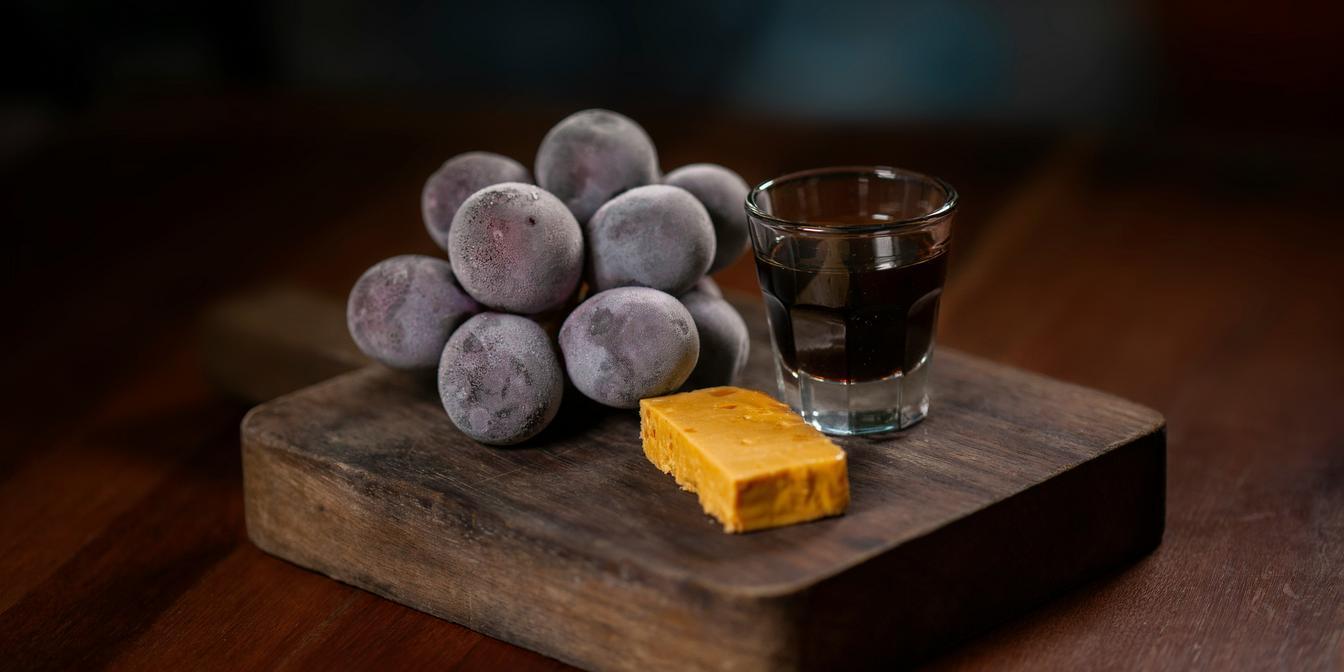
Whole prunes and prune juice can both contain sorbitol, but they are not nutritionally or practically identical. Whole fruit generally retains more of its original fibre structure and requires chewing. Juice is easier to drink quickly, and concentrations and serving sizes can vary by product.
- Choose whole prunes if you want a measurable whole-food serving that contributes dietary fibre and can be added to meals.
- Consider prune juice if texture or chewing makes whole fruit impractical, while measuring the serving rather than pouring freely.
- Do not substitute by guesswork. A glass of juice is not automatically equivalent to 80 or 100 grams of whole prunes.
The evidence does not provide a robust head-to-head trial proving that one form is consistently more effective. Preference, digestive tolerance and the product label are therefore important.
Simple Ways to Add Dried Plums to Your Diet

Prunes do not have to be eaten all at once. Dividing a portion can be more comfortable and makes it easier to notice how your digestive system responds.
- Chop them into oatmeal or another whole-grain breakfast.
- Serve a measured portion alongside yogurt or a regular meal.
- Soak them in water if you prefer a softer texture.
- Blend a small measured portion into a smoothie rather than adding an uncounted handful.
- Use chopped dried plums in grain dishes, stews or traditional Persian recipes.
A small dried-plum snack pouch may make portion awareness more convenient, but read the product label before comparing it with a conventional-prune research serving. When using dried plums in recipes, remember that the total amount is divided among all portions of the dish.
How to Choose Dried Plums for Constipation

The closer a product is to the conventional prunes studied in trials, the easier it is to apply the evidence. Use the following checks:
- Read the product name carefully. “Prunes,” “dried plums,” “aloo” and “Aloo Bukhara” do not always identify the same cultivar or preparation.
- Review the ingredient list. Added sweeteners, salt, seasonings or coatings make the product less comparable with plain trial prunes.
- Check fibre per serving. Do not assume every dried-plum product provides the same amount.
- Compare serving weight. Grams are more meaningful than an inconsistent piece count.
- Notice pits and moisture. A pit changes the edible weight, while softer and drier fruits may differ substantially in size.
A pantry product such as Persian dried plum labeled aloo can be enjoyed as a snack or cooking ingredient, but its own label—not research on a different prune product—should guide portion comparisons.
Possible Side Effects and Common Mistakes
Gas, Bloating, Cramping and Loose Stools
Flatulence increased in the trial of 80- and 120-gram prune portions in healthy adults. Sorbitol and fermentable fibre can also cause cramping or diarrhea when the amount exceeds an individual’s tolerance. ([pubmed.ncbi.nlm.nih.gov](https://pubmed.ncbi.nlm.nih.gov/29398337/?utm_source=openai))
Reducing the portion or stopping the trial is more sensible than continuing to increase it through worsening symptoms. Severe or persistent pain should not be dismissed as a normal sign that the prunes are “working.”
Common Mistakes to Avoid
- Starting with a very large portion: Jumping directly from no dried fruit to a research-sized serving may increase digestive discomfort.
- Assuming every dried plum is a trial-equivalent prune: Product formulation and serving composition vary.
- Expecting immediate rescue: Trials primarily assessed repeated daily intake, not dependable relief within a few hours.
- Ignoring the rest of the diet: Prunes work within an overall eating and drinking pattern, not in isolation.
- Using more despite diarrhea: Loose stools are an adverse effect, not evidence that a larger portion is better.
- Trying to treat an unexplained change indefinitely: New, persistent or recurrent constipation may require investigation.
When Constipation Needs Medical Advice
Food-based self-care is not appropriate for every situation. Seek prompt medical care if constipation occurs with rectal bleeding, blood in the stool, constant abdominal pain, vomiting, fever, inability to pass gas or unintentional weight loss. ([niddk.nih.gov](https://www.niddk.nih.gov/health-information/digestive-diseases/constipation/symptoms-causes?utm_source=openai))
Arrange a medical review if constipation is new and persistent, repeatedly returns, does not improve with self-care or follows a sudden change in bowel habits. A clinician should also review possible medication causes rather than having you stop a prescribed medicine independently. Constipation can arise from slow colonic movement, pelvic-floor disorders, medication effects and several underlying health conditions, so simply adding fibre may not address the cause. ([niddk.nih.gov](https://www.niddk.nih.gov/health-information/digestive-diseases/constipation/treatment?utm_source=openai))
Evidence discussed in this article comes mainly from adult studies. Constipation in infants or children requires age-appropriate guidance from a pediatric healthcare professional rather than applying adult prune portions.
The Bottom Line
Dried plums for constipation are supported by promising but limited clinical evidence. Conventional prunes may increase stool frequency, improve hard stool consistency and help some adults achieve more complete spontaneous bowel movements. Their combined fibre and sorbitol content offers a plausible explanation, but benefits are not universal.
Research portions have generally ranged from 80 to 120 grams per day, while recent practical guidance lists roughly eight to ten conventional prunes daily. Starting below that amount and increasing gradually can help identify personal tolerance. Choose a product that resembles the prunes studied, use grams rather than piece count where possible, and stop or reduce the portion if it causes significant bloating, cramping or diarrhea.
Prunes are a reasonable dietary option—not a proven cure and not clearly superior to psyllium across all outcomes. If constipation persists or is accompanied by warning signs, seek medical evaluation rather than relying on increasingly large servings of dried fruit.
Frequently Asked Questions
Are dried plums and prunes the same thing?
Prunes are dried plums, but not every product labeled dried plum, aloo or Aloo Bukhara is identical to the conventional prunes used in trials. Variety, moisture, pits, preparation and added ingredients can differ.
How many dried plums should I eat for constipation?
Whole-prune trials commonly used 80 to 120 grams daily, and recent BDA guidance summarizes a practical portion as about eight to ten conventional prunes. Because this may cause gas or loose stools, consider starting with a smaller serving and increasing gradually if tolerated. ([pubmed.ncbi.nlm.nih.gov](https://pubmed.ncbi.nlm.nih.gov/21323688/?utm_source=openai))
How long does it take for prunes to work?
There is no dependable onset time. Some people may notice a change sooner, but major trials assessed regular intake over three to four weeks rather than establishing predictable same-day relief. ([pubmed.ncbi.nlm.nih.gov](https://pubmed.ncbi.nlm.nih.gov/21323688/?utm_source=openai))
Is prune juice as effective as whole dried plums?
A placebo-controlled trial found that a prune-juice preparation improved hard stools and subjective constipation complaints, but there is not enough head-to-head evidence to say it is as effective as whole prunes. Juice and whole fruit also differ in fibre and serving format. ([pubmed.ncbi.nlm.nih.gov](https://pubmed.ncbi.nlm.nih.gov/35971232/?utm_source=openai))
Are dried plums better than psyllium for constipation?
One small 2011 trial favored dried plums for complete spontaneous bowel movements and stool consistency, but newer pooled evidence did not establish prunes as superior to psyllium across constipation outcomes. The certainty for several comparisons is very low. ([pubmed.ncbi.nlm.nih.gov](https://pubmed.ncbi.nlm.nih.gov/21323688/?utm_source=openai))