





















Dried fruit can be part of a healthy, balanced diet, but it is not nutritionally identical to fresh fruit. Removing most of a fruit’s water creates a smaller, more concentrated food, so a few mouthfuls can supply a substantial amount of carbohydrate and naturally occurring sugar. The practical answer is not to avoid dried fruit, but to choose it carefully, measure a sensible portion and eat it in a way that suits your overall diet.
Are dried fruits healthy? The short answer
Yes, traditional dried fruits can be healthy when eaten in appropriate portions. They retain dietary fibre and can provide useful amounts of minerals and plant compounds, although the exact nutritional value differs between raisins, dates, figs, apricots, prunes, mulberries and other varieties.
The main issue is concentration. Because dried fruit contains much less water than fresh fruit, it takes up less room in a bowl and is easy to eat quickly. That can turn a modest serving into several portions without you noticing. Sweetened cranberries, candied fruit, coated fruit and some fruit snacks may also contain added sugars or other ingredients.
Current UK guidance uses approximately 30g of dried fruit as one adult 5 A Day portion. That is a useful starting point rather than a universal prescription. Individual requirements vary, and people who count carbohydrates may need to use the exact nutrition information on their packet.
What counts as dried fruit?
Traditional dried fruit is fruit from which much of the water has been removed through sun-drying, air-drying, dehydration or another controlled process. Common examples include raisins, sultanas, dates, dried figs, dried apricots, prunes and dried mulberries.
Several products can look similar without being nutritionally equivalent:
- Fresh fruit contains substantially more water and normally has more volume per gram of carbohydrate.
- Candied or crystallised fruit is processed with added sugar or syrup and is better treated as a sweet ingredient than as plain dried fruit.
- Fruit leather is generally made from fruit pulp or purée that has been spread and dried. Added ingredients vary, so check the label. Our guide to Persian lavashak flavours explains this distinct style of fruit leather.
- Fruit crisps or chips may be dehydrated, baked, freeze-dried or fried. Some are plain fruit; others include oil, sugar, syrup or flavourings.
- Freeze-dried fruit is crisp and very light because water is removed at low temperature under vacuum. It is still concentrated when compared by weight with fresh fruit.
- Nuts are grouped separately in nutritional guidance and should not be counted as dried fruit, even when the two are sold in the same snack mix.
The words on the front of a packet do not tell the whole story. “Fruit snack”, “natural” or “made with fruit” does not establish whether the product is whole dried fruit, whether sweetener has been added or how large a serving should be.
How drying changes fruit
Water makes up much of the weight and volume of fresh fruit. When most of it is removed, the fruit becomes lighter and smaller while retaining much of its carbohydrate. As a result, calories, carbohydrate and naturally occurring sugars become more concentrated per 100g.
Dietary fibre and many minerals remain, although their measured amount per 100g may appear higher simply because there is less water. The effect on vitamins and plant compounds is less predictable. Fruit variety, temperature, exposure to oxygen, storage and processing method all matter, and some heat-sensitive vitamins may be reduced.
Drying therefore does not automatically make fruit “unhealthy”, nor does it preserve every nutrient unchanged. It creates a compact food with different portion requirements.
The potential health benefits of dried fruit
Dried fruit is not a cure or a superfood. Its value comes from contributing fruit, fibre and dietary variety within an eating pattern that also includes vegetables, fresh fruit, wholegrains, protein foods and other appropriate food groups.
Fibre and digestive health
Traditional dried fruits contain dietary fibre, with the amount varying considerably by type. Fibre contributes to normal bowel function and adds bulk to the diet. Figs and prunes commonly provide more fibre per serving than some raisin products, but the packet remains the best source for a specific product.
Prunes are particularly relevant because they contain fibre as well as naturally occurring components that distinguish them from many other dried fruits. Anyone interested in their condition-specific use can consult our evidence-focused guide to dried plums and constipation. Increase fibre gradually and ensure your overall fluid intake is appropriate for you.
Vitamins, minerals and plant compounds
Depending on the variety, dried fruit may contribute potassium, copper, iron and other micronutrients. Dried apricots, dates, figs, prunes and raisins do not have identical nutritional profiles, so broad statements such as “all dried fruit is high in iron” are misleading.
Dried fruits also contain polyphenols and other plant compounds. Their quantities vary with the fruit, cultivar and drying method, and their presence does not mean a single food can prevent or treat disease. Variety across the diet remains more useful than choosing one dried fruit based on a headline nutrient.
Convenience, shelf life and dietary variety
Dried fruit is portable, requires little preparation and can help households keep fruit available when fresh options are inconvenient. Its longer usable life may also reduce waste, provided it is stored according to the packet instructions.
It has culinary value beyond snacking. Raisins, dates, prunes, apricots and barberries appear in Persian and wider Middle Eastern dishes, where sweetness may balance sour, aromatic or savoury flavours. Readers building a versatile cupboard can see where dried fruits fit among other Middle Eastern pantry essentials.
How much sugar is in dried fruit?
Dried fruit often contains a substantial amount of sugar per 100g because most of the water has been removed. A realistic 30g portion commonly contains roughly 11g to 22g of total sugars, depending on the fruit and product. Larger handfuls can therefore contribute considerably more carbohydrate than expected.
That does not make plain dried fruit nutritionally identical to confectionery. Traditional dried fruit can retain fibre, minerals and the fruit’s physical structure, while confectionery may be formulated primarily from sugar, fat or refined ingredients. Nevertheless, the nutritional differences do not make portion size irrelevant.
Natural sugar versus added sugar
In plain raisins or dried apricots, most or all of the sugar may have been present naturally in the original fruit. Other products can contain sugar, glucose syrup, honey, fruit juice concentrate or a sweet coating added during manufacture.
Use two parts of a UK food label together:
- Read the ingredients list. Ingredients are generally presented in descending order by weight. Look for sugar, syrup, honey, glucose, fructose, dextrose and juice concentrates. A single-fruit ingredients list is the clearest option when you want plain dried fruit.
- Check “carbohydrate, of which sugars”. The sugars figure includes both naturally occurring and added sugars; it does not tell you how much was added. Use it to compare total sugar between products, then use the ingredients list to identify sweeteners.
“No added sugar” does not mean “low sugar”. It means a sweetener has not been added under the relevant labelling conditions; the fruit can still contain concentrated natural sugar.
Why dried fruit appears higher in sugar than fresh fruit

Imagine comparing 100g of grapes with 100g of raisins. Fresh grapes contain a large amount of water, while 100g of raisins represents many more grapes after much of that water has disappeared. The raisin portion therefore contains more fruit solids, carbohydrate and sugar in the same weight.
Comparison method matters:
- Equal weight: 100g of raisins will normally contain far more sugar and calories than 100g of fresh grapes.
- Guideline portions: the UK comparison is closer to 30g of dried fruit versus about 80g of fresh fruit.
- Equal original fruit: drying does not create all the natural sugar; it removes water and makes the original sugar more concentrated.
This explains why “dried fruit versus fresh fruit” arguments can produce different answers. Fresh fruit is usually more filling by volume, while dried fruit is more compact and convenient.
Sugar and carbohydrate comparison by dried-fruit type
The following figures are illustrative calculations for 30g of plain fruit. Most rows use generic USDA FoodData Central or SR Legacy entries and have been multiplied by 0.3 and rounded. The mulberry row uses an unsweetened dried-mulberry composition entry from the NutriData database. “Available carbohydrate” is an approximation that excludes reported fibre.
| Dried fruit and assumption | Energy per 30g | Available carbohydrate | Total sugars | Fibre |
|---|---|---|---|---|
| Seedless raisins | About 90 kcal | About 22.6g | About 17.8g | About 1.1g |
| Deglet Noor dates | About 85 kcal | About 20.1g | About 19.0g | About 2.4g |
| Dried figs, uncooked | About 75 kcal | About 16.2g | About 14.4g | About 2.9g |
| Dried apricots, sulfured and uncooked | About 72 kcal | About 16.6g | About 16.0g | About 2.2g |
| Prunes, uncooked | About 72 kcal | About 17.0g | About 11.4g | About 2.1g |
| Dried mulberries, database example | About 105 kcal | About 22.4g | About 22.2g | About 2.7g |
These are not universal label values. Moisture level, fruit variety, processing and database conventions create meaningful differences. Ready-to-eat or partially rehydrated fruit may contain more water, while sweetened products may contain additional sugar. For carbohydrate counting or a specific dietary plan, prioritise the nutrition declaration on the packet you are eating.
What is a healthy portion of dried fruit?

For UK adults, approximately 30g of dried fruit counts as one 5 A Day portion. NHS examples include roughly one heaped tablespoon of raisins, currants or sultanas, two dried figs or three prunes. Piece sizes vary, so weighing a few servings at home gives a more reliable visual reference.
Three different ideas are often confused:
- A guideline portion is the approximate 30g amount used for adult 5 A Day advice.
- A labelled serving is the quantity chosen by the manufacturer for its nutrition information. It could be more or less than 30g.
- Your actual serving is what you pour, cook with or eat. A large handful may be two or three labelled servings.
A practical method is to weigh 30g into a small bowl, notice its volume and pre-portion larger packets. If dried fruit is being mixed into cereal, baking or a shared dish, calculate the total used and divide it by the number of portions.
The 30g figure is adult guidance, not a requirement to eat dried fruit every day. Fresh, frozen and canned fruit can provide more volume, and including different fruits and vegetables supports dietary variety.
How to choose healthier dried fruit

There is no single “healthiest dried fruit” for everyone. A useful choice depends on ingredients, serving size, how it will be eaten and any personal nutritional requirements.
- Start with the ingredients. If you want unsweetened dried fruit, look for fruit as the only food ingredient rather than assuming every packet is plain.
- Do not confuse preservatives with added sugar. Some dried fruit includes substances used to preserve colour or quality. Their presence is a separate question from whether sweetener has been added.
- Compare like with like. Use the per-100g column to compare similar products, then calculate what your actual portion provides.
- Check total carbohydrate when relevant. The “of which sugars” line is not a substitute for total carbohydrate, particularly for people who count carbohydrates.
- Look beyond front-of-pack language. “Natural”, “fruit-based” and “no added sugar” do not guarantee a low-sugar or low-calorie food.
- Identify coatings and mixed ingredients. Chocolate, yoghurt-style coatings, syrups, confectionery and sweetened cereals change the nutritional profile of a fruit mix.
Plain varieties can still differ in flavour and use. For example, black raisins, also known as maviz, can be added to breakfast dishes, baking and home cooking, while green raisins with a mild tangy note can work in cereals, desserts or savoury rice dishes. Check each product’s current packet information rather than transferring values from a generic table.
Healthy ways to eat dried fruit
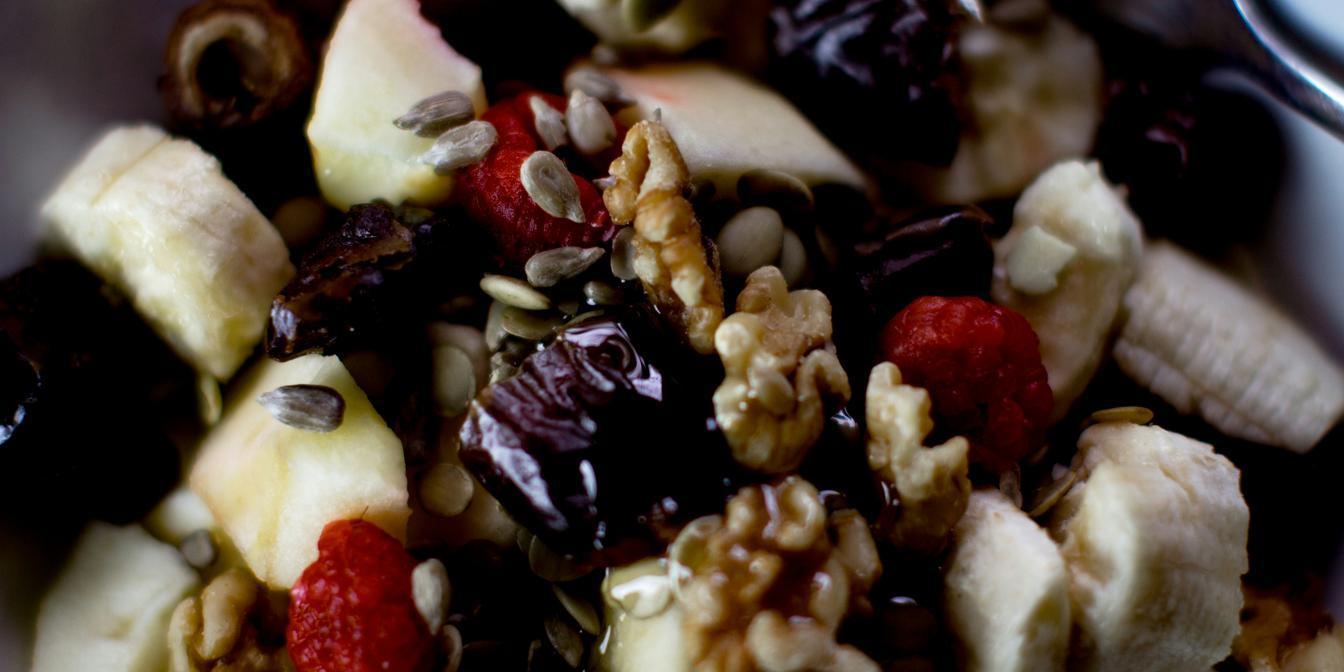
Dried fruit is easiest to manage when it is treated as an ingredient or measured accompaniment rather than eaten continuously from a large bag.
- Sprinkle a small amount over plain yoghurt, porridge or unsweetened cereal.
- Combine it with oats, seeds or nuts as part of a meal, while measuring each energy-dense ingredient separately.
- Chop dates, figs or apricots so their flavour is distributed through a dish.
- Add raisins or barberries to rice, couscous, salads and savoury stuffings.
- Use prunes or apricots in stews where fruit complements savoury ingredients.
- Serve a measured amount as part of a meal rather than repeatedly grazing on it.
Persian food offers many examples of fruit being used for contrast rather than simply as a stand-alone sweet. For further ideas, explore this overview of sweet, sour and savoury Persian snacks.
Dried fruit, diabetes, weight management and teeth
Dried fruit and diabetes
People with diabetes do not necessarily need to exclude dried fruit, but its concentrated carbohydrate makes portion awareness important. A 30g portion can contain around 16g to 23g of available carbohydrate in the examples above, and a larger serving can have a greater effect on blood glucose.
Use the packet’s total carbohydrate figure if you count carbohydrates, spread fruit intake in accordance with your individual plan and seek advice from your diabetes team or a registered dietitian if you are unsure. Pairing dried fruit with other foods does not remove its carbohydrate.
Dried fruit and weight management
Dried fruit can fit into a weight-management plan, but it provides more calories in a smaller volume than fresh fruit. Eating directly from a large packet, trail mix or sharing bowl makes quantity difficult to judge. Pre-portioning it or using it as a measured recipe ingredient offers more control without requiring complete avoidance.
Dried fruit and tooth decay
UK guidance recommends keeping dried fruit to mealtimes rather than using it as a frequent between-meal snack, helping to reduce the impact of sugars on teeth. This advice applies even when the product has no added sugar. Plain dried fruit may be nutritionally different from sweets, but its concentrated sugars still matter for dental health.
Common mistakes to avoid
- Assuming natural sugar is unlimited: its source matters, but so do quantity and frequency.
- Using a large handful as one portion: weigh 30g before relying on visual estimates.
- Reading only “of which sugars”: use the ingredients list to investigate added sweeteners and total carbohydrate when counting carbs.
- Treating every fruit product as plain dried fruit: fruit leather, candied fruit, fried chips and coated snacks can be substantially different.
- Comparing equal weights without considering water: 100g of fresh fruit and 100g of dried fruit represent very different amounts of original fruit.
- Searching for one universally healthiest variety: ingredients, portion size, dietary variety and intended use are more informative than rankings.
- Relying on generic nutrition tables for a branded product: use the current pack label whenever precise values matter.
The bottom line
So, are dried fruits healthy? Plain dried fruit can contribute fibre, micronutrients, plant compounds and variety to a balanced diet. Its disadvantages are mainly practical: it is concentrated, easy to overeat and sometimes sold with added sweeteners or coatings. Choose a product by reading both the ingredients and nutrition declaration, use roughly 30g as the UK adult portion guide, and favour eating it as part of a meal.
Frequently Asked Questions
Is it healthy to eat dried fruit every day?
A measured portion of plain dried fruit can fit into a balanced daily diet, but it is not essential to eat it every day. Vary your fruit and vegetable choices and keep dried fruit to mealtimes for dental health.
How much dried fruit should I eat in one serving?
UK guidance uses approximately 30g as one adult portion. That may be about one heaped tablespoon of raisins, two dried figs or three prunes, although weighing is more accurate.
Does dried fruit count as one of your 5 A Day?
Yes. Around 30g of dried fruit counts as one adult 5 A Day portion in UK guidance. Fresh, frozen and canned fruit can help provide additional variety and volume.
Is the sugar in dried fruit considered added sugar?
Not when it occurs naturally in plain, intact dried fruit. However, manufacturers may add sugar, syrup, honey or juice concentrate. The ingredients list identifies these; “of which sugars” includes both natural and added sugars.
Which dried fruits have no added sugar?
Raisins, dates, figs, prunes, apricots and mulberries are all available without added sugar, but recipes vary. Choose products whose ingredients list contains only the fruit, allowing for any separately declared processing additives.